The funny thing about Sammy Hagar’s legacy is that people still argue about it like the story never ended.
That alone says something important.
Rock fans don’t spend decades debating artists who didn’t matter. And truth be told, Sammy Hagar has remained one of the most passionately discussed figures in classic rock history precisely because his career touched so many different emotional corners of the genre. Hard rock. Arena rock. California rock culture. Van Halen mythology. Solo-radio anthems. The whole lifestyle side of rock stardom too.
Some fans hear freedom when they hear Sammy. Others hear melody. Some still see him as the guy who helped save Van Halen after the David Lee Roth split. Others believe he changed the band too much.
And honestly? That tension became part of the legacy itself.
Because Sammy Hagar never fit neatly into one category. He wasn’t only the Red Rocker. Wasn’t only the “other” Van Halen singer either. He became something rarer — a rock frontman who stayed emotionally recognizable across multiple eras without completely losing himself along the way.
That’s harder than people think.
He Proved Van Halen Could Survive the Impossible
Let’s start with the obvious one.
Replacing David Lee Roth in 1985 looked impossible.
Seriously. At that moment, Van Halen wasn’t just a successful band. It was American rock mythology. Roth’s personality dominated MTV, radio, interviews, and arena stages in ways almost nobody else could replicate. Most fans assumed the band would either collapse completely or fade into irrelevance after he left.
Then Sammy Hagar walked in.
And somehow, against all odds, the band became even bigger commercially.
Albums like 5150, OU812, For Unlawful Carnal Knowledge, and Balance all hit No. 1. Massive tours followed. Songs like Dreams, Right Now, and “When It’s Love” became defining arena-rock tracks of the late ’80s and early ’90s.
That achievement alone permanently cemented Sammy’s place in rock history.
But honestly, the bigger legacy wasn’t just commercial survival.
It was transformation.
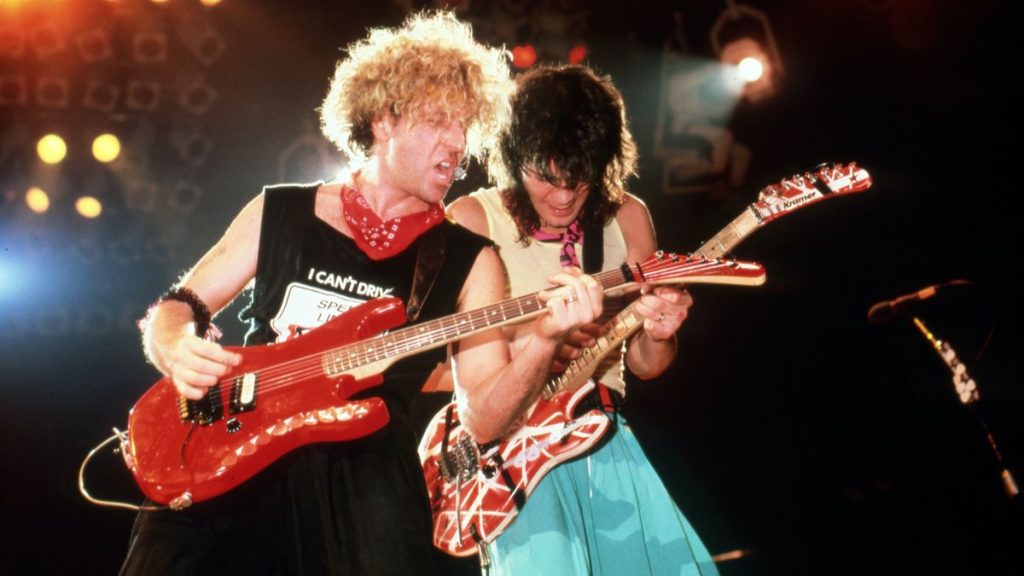
Sammy helped push Van Halen toward more melodic, emotional territory without completely destroying the band’s power. The music became more expansive. More reflective sometimes. Eddie Van Halen started writing differently too, leaning further into keyboards and atmospheric arrangements.
To be fair, some fans hated that shift.
Others loved it deeply.
And honestly, both reactions are part of why the legacy still matters today.
Sammy Brought Emotional Warmth Into Hard Rock
One thing that separates Sammy Hagar from many classic rock singers is emotional openness.
Truth be told, a lot of hard rock from the late ’70s and ’80s leaned heavily on coolness, danger, irony, or emotional distance. Sammy brought warmth into the genre without making it feel weak.
That’s not easy.
Songs like “Dreams” and “Right Now” could’ve sounded unbearably corny with the wrong singer. Sammy somehow grounded them emotionally because he sounded sincere. Fans believed him when he sang about hope, ambition, freedom, or relationships.
And honestly, sincerity became one of his defining artistic signatures.
Most fans don’t realize how unusual that was during the height of glam metal and arena-rock excess. Sammy rarely hid behind detached rock-star mystery. He projected enthusiasm openly. Joy too. Even vulnerability at times.
That emotional accessibility shaped the entire Sammy-era Van Halen sound.
It also helped his solo catalog age better than critics predicted. I Can’t Drive 55 remains fun because it feels authentic rather than manufactured. “Eagles Fly” still resonates because the vulnerability sounds real. “Little White Lie” still stings emotionally because fans hear actual frustration underneath the performance.
And honestly, that human quality may be why younger listeners continue discovering Sammy Hagar songs through streaming platforms decades later.
The emotions still translate.
The Red Rocker Lifestyle Became Cultural Mythology
Here’s where the story gets bigger than music alone.
Sammy Hagar didn’t just build songs. He built a lifestyle mythology around freedom, California energy, fast cars, Cabo nights, and endless movement.
And somehow it felt believable.
That matters enormously.
A lot of rock stars projected exaggerated images that eventually collapsed under their own artificiality. Sammy’s identity always seemed connected to who he actually was offstage. The Ferraris. The tequila. The beach atmosphere. The open-road obsession. Fans sensed consistency between the music and the man.
That authenticity helped create one of the most recognizable lifestyles in classic rock culture.
What’s interesting is how deeply American that legacy feels too.
Sammy represented a specific version of freedom tied to highways, loud music, outdoor living, and escape from pressure. His songs often sounded like motion itself. Even the visual imagery surrounding the Red Rocker years reinforced that idea constantly.
And honestly, Cabo Wabo expanded the mythology even further.
Long before celebrity liquor brands became standard business moves, Sammy turned Cabo San Lucas into an emotional extension of his music identity. Fans didn’t just buy tequila. They bought into a feeling.
Summer. Friendship. Music. Freedom.
That cultural branding became part of his rock legacy whether critics liked it or not.
He Stayed Relevant Longer Than Most Expected
One reason Sammy Hagar’s legacy deserves more respect is longevity.
Not just career length.
Emotional relevance.
A lot of rock singers from the 1970s eventually became trapped by nostalgia or self-destruction. Sammy adapted repeatedly without completely abandoning who he already was. That’s incredibly difficult in classic rock, where audiences often punish artists for changing too much while also punishing them for standing still.
Sammy somehow survived both pressures.
Solo artist. Montrose frontman. Van Halen singer. Cabo entrepreneur. Chickenfoot collaborator. Touring veteran. Radio personality. He moved between identities without fully losing the core emotional personality fans recognized immediately.
Most fans believe that emotional consistency mattered more than critical approval in the long run.
And honestly, they’re probably right.
Because while critics often focused on the endless “Hagar vs Roth” arguments, audiences kept showing up. Kept streaming the songs. Kept attending the concerts. Kept debating the albums passionately.
That ongoing connection matters more than coolness eventually.
Especially after Eddie Van Halen’s death in 2020, many fans revisited the Hagar-era records with fresh emotional perspective. Old rivalries softened slightly. Songs like “Dreams” and “Right Now” started sounding more bittersweet than divisive.
Time changed the emotional framing completely.
The Legacy Is Messy — and That’s Why It Feels Real
Honestly, part of Sammy Hagar’s legacy comes from the imperfections too.
The feuds. The ego clashes. The public frustrations with Eddie Van Halen. The fan wars that never fully ended. The moments critics mocked the positivity or the party-guy image.
None of that disappeared.
And maybe it shouldn’t.
Because classic rock history isn’t supposed to feel neat and perfectly resolved. The emotional messiness is part of what keeps the music alive. Sammy’s story contains triumph, reinvention, resentment, reconciliation attempts, business success, heartbreak, nostalgia, and genuine joy all tangled together.
That complexity makes him feel human instead of mythological.
And honestly, I think fans connect to that deeply now.
Especially older fans who understand life rarely follows clean narratives either. Relationships fracture. Friendships become complicated. Success arrives alongside regret sometimes. Yet somehow the music survives all of it.
Sammy’s career reflects that reality more openly than many rock biographies do.
Why Sammy Hagar’s Legacy Still Matters
Honestly, the older I get, the more I think Sammy Hagar’s greatest legacy is emotional energy.
Not perfection.
Energy.
The sense that life should still feel exciting even after heartbreak, aging, business battles, lineup changes, and decades inside an industry built to burn people out. Sammy never fully lost that enthusiasm. Sometimes critics rolled their eyes at it. Fans usually understood it immediately.
Because deep down, classic rock was always partly about possibility.
About feeling alive.
Somewhere tonight, somebody’s driving home with “Right Now” or “Best of Both Worlds” playing loudly enough to shake old memories loose again. Another fan is still arguing passionately about Roth versus Hagar like it’s 1992. Somebody else is probably watching old live clips of Sammy screaming through “Dreams” and remembering when arena rock felt gigantic and emotional all at once.
That’s legacy.
Not just records sold or awards collected.
A lasting emotional connection people keep carrying with them long after the amplifiers quiet down.