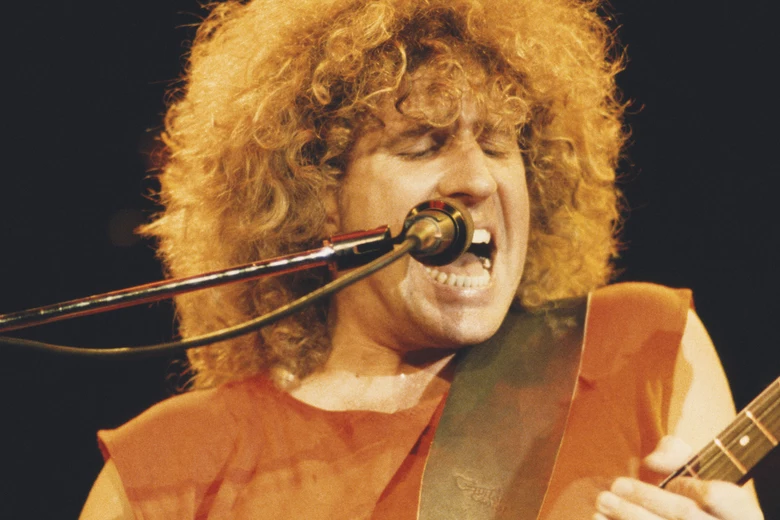
Sammy Hagar’s Motivational Songs: The Red Rocker Anthems That Make You Drive Harder, Dream Bigger, and Refuse to Slow Down
Sammy Hagar’s motivational songs don’t come wrapped in delicate poetry or coffeehouse confession. They come roaring out of the speakers like a red Ferrari blowing past a speed trap. That’s the magic. Whether he’s fronting Van Halen, tearing through solo records, or preaching the gospel of second chances with a guitar in his hands, Hagar has always understood something classic rock fans know in their bones: sometimes you don’t need subtlety. You need a chorus that kicks you in the ribs and reminds you you’re still alive. From “Dreams” to “I Can’t Drive 55,” the Red Rocker made motivation sound loud, stubborn, sunburned, and gloriously American.
The Red Rocker’s Secret Weapon Was Always Optimism
Sammy Hagar gets tagged as the party guy, the tequila guy, the Cabo guy. Fair enough. He earned all of that. But underneath the grin and the fast-car mythology, there’s a serious engine running: optimism. Not soft optimism. Not greeting-card nonsense. Hagar’s version is tougher, almost blue-collar. It says life will hit you, people will doubt you, bands will break up, critics will sneer, and you still have to get up and sing louder.
That’s why his motivational side matters. Most fans don’t realize how consistent that thread is across his career. Montrose gave him the launchpad. His solo years gave him the Red Rocker identity. Van Halen gave him the biggest stage in the world. Through all of it, Hagar kept returning to songs about motion, belief, risk, survival, and refusing to accept the limits somebody else hands you.
Truth be told, that’s a very American kind of rock and roll. Not always subtle. Often messy. But real.
“Dreams”: The Van Halen Anthem That Took the Roof Off
If you’re talking about Sammy Hagar’s motivational songs, “Dreams” has to be near the top. Released on Van Halen’s 1986 album 5150, it arrived at a moment when the band had everything to prove. David Lee Roth was gone. Fans were suspicious. Critics were waiting. And then here came this massive, sky-punching song that sounded like Van Halen had traded the backyard party for a rocket launch.
Here’s the thing: “Dreams” could have been cheesy. The title alone walks right up to the edge. But Eddie Van Halen’s keyboards shimmer with purpose, Alex Van Halen drives it forward, Michael Anthony’s harmonies lift the chorus, and Sammy sings like a man trying to clear a mountain with his voice.
Producer Mick Jones of Foreigner worked on 5150, and accounts from that era often describe how hard Sammy was pushed vocally. You can hear it. He’s not coasting. He’s reaching. That strain gives the song its power. It’s not just about having dreams. It’s about fighting your way up to them.
“Right Now”: The Big Statement That Became Bigger Than the Band
“Right Now” is one of those songs that escaped its album and became part of the culture. Released on 1991’s For Unlawful Carnal Knowledge, it was already a strong Van Halen track. Then the video turned it into something else entirely. Those stark black-and-white statements flashing across the screen made the song feel like a challenge, a sermon, and a public service announcement all at once.
To be fair, some fans think “Right Now” is too polished, too message-heavy, too far from the wild early Van Halen spirit. I understand that argument. Roth-era Van Halen would never have made this song. But that’s exactly why the Hagar years matter. They allowed Van Halen to grow into subjects bigger than lust, jokes, and California swagger.
The piano figure gives it gravity. Eddie’s guitar still burns when it needs to. Sammy’s vocal is direct, almost urgent. No wink. No smirk. Just a man saying the moment is here, and you’re wasting it if you wait.
You could argue “Right Now” is the ultimate adult Van Halen motivational song. Not because it sounds old. Because it understands time.
“I Can’t Drive 55”: Motivation as Rebellion
Not every motivational song has to tell you to follow your dreams. Sometimes it just has to remind you that you still have a pulse. “I Can’t Drive 55,” from Sammy’s 1984 solo album VOA, is exactly that kind of record.
On the surface, it’s a speed-limit rant. Hagar gets irritated by the national 55 mph limit, turns that frustration into a riff, and suddenly every lead-footed American with a radio has an anthem. But if you think about it, the song works because it taps into something deeper than driving. It’s about resistance. It’s about being told to slow down when everything in you wants to move.
The guitar is blunt. The chorus is impossible to miss. The video, with Sammy in that yellow jumpsuit and courtroom chaos, helped burn the whole thing into MTV memory. But the real reason it lasted is emotional. “I Can’t Drive 55” says rules may be necessary, but sometimes the human spirit still wants to floor it.
In many ways, that’s pure Hagar. He doesn’t make rebellion sound tragic. He makes it sound fun.
“There’s Only One Way to Rock”: The Gospel According to Sammy
Before Van Halen, before Cabo Wabo became a destination, before the Hagar vs Roth debate turned into a permanent classic rock campfire argument, Sammy had “There’s Only One Way to Rock.” Released on 1981’s Standing Hampton, it remains one of his clearest mission statements.
The song is not complicated. That’s part of its charm. It charges straight ahead, all muscle and conviction, like a bar band that somehow got handed arena lights. Hagar sings it like he’s not asking for permission. He’s declaring a law of nature.
What’s interesting is how motivational it feels without trying to be inspirational in the obvious sense. It’s not about healing. It’s not about personal growth. It’s about commitment. If you’re going to rock, rock. If you’re going to live, live. Don’t hedge. Don’t mumble. Don’t stand in the back pretending you don’t care.
Classic rock is full of songs about attitude, but this one has a work ethic hiding inside it. That’s why it still hits. It tells you to show up loud.
“Top of the World”: Victory Music With a Bittersweet Glow
“Top of the World,” from For Unlawful Carnal Knowledge, sounds like celebration in widescreen. The riff nods back to the ending of “Jump,” which gives it a strange built-in history, almost like Van Halen is connecting the Roth and Hagar eras without making a big speech about it. Eddie Van Halen sounds bright and confident. Sammy sounds like he’s throwing his arms open to the whole arena.
On one level, it’s simple victory music. You made it. You’re here. Look around. Enjoy the view. But on the other hand, time has given the song a more complicated glow. It arrived in 1991, right before grunge changed the temperature of American rock. The old arena giants were still huge, but the ground was starting to move.
That makes “Top of the World” feel even more powerful now. It captures a band standing high, smiling into the wind, maybe not fully aware that the weather is changing. As a motivational song, it’s not just about reaching the summit. It’s about recognizing the moment while you’re still in it.
“Give to Live”: Sammy’s Big-Hearted Solo Philosophy
“Give to Live” may be the most underrated motivational song in Sammy Hagar’s catalog. Released on 1987’s I Never Said Goodbye, the solo album he recorded while already fronting Van Halen, it shows a different side of the Red Rocker. Less speed. Less swagger. More soul.
Eddie Van Halen co-produced the album and played bass, which still feels like one of those strange, beautiful rock-history details from the early honeymoon period of the Van Hagar years. And “Give to Live” carries that spirit. It’s not a romantic ballad exactly. It’s not a party song. It’s a philosophy song.
Here’s the thing: Hagar’s message is simple, but not shallow. If you want something out of life, you have to put something into it. Love, effort, generosity, risk — whatever it is, you don’t get to stand there empty-handed and expect the world to feed you.
That’s a very Sammy idea. Practical. Spiritual without getting precious. Big enough for an arena, plain enough for a guy driving home after a long shift.
“Eagles Fly”: The Spiritual Climb
“Eagles Fly” is where Sammy gets closest to mountain-top philosophy. Also from I Never Said Goodbye, the song has always felt a little separate from the rest of his catalog. More acoustic. More reflective. Less concerned with being cool.
And truth be told, that’s why it works.
Hagar has said over the years that the song came from a deeper, more spiritual place, and you can hear that in the way he sings it. There’s no cartoon Red Rocker here. No tequila grin. No speed-limit punchline. Just a man looking upward and trying to make sense of freedom, fear, and the possibility of rising above the mess.
Van Halen later performed “Eagles Fly” live during the Hagar era, which says something about its emotional weight. It could stand inside a Van Halen concert without being swallowed by the spectacle.
In my opinion, this is one of Sammy’s most honest songs. It motivates not by shouting, but by lifting. Different kind of power.
“Best of Both Worlds”: Choosing More Instead of Less
“Best of Both Worlds” from 5150 is often treated as a fun Van Halen rocker, and it is. But underneath the bounce, it has one of Sammy’s most important motivational ideas: why settle for one version of life when you can chase the bigger one?
That theme fit the band perfectly in 1986. Van Halen was trying to prove it could survive losing Roth. Sammy was trying to prove he belonged in one of the biggest bands in America. Eddie was expanding the sound without abandoning the guitar hero crown. Everything about the moment screamed risk.
The song’s title almost works as a thesis for the Hagar era. Old Van Halen fire, new melodic reach. Party-band muscle, grown-up emotion. Critics may argue over whether the band truly achieved both, but the ambition was real.
Most fans believe “5150” changed the emotional range of Van Halen. “Best of Both Worlds” is one of the reasons. It doesn’t just celebrate possibility. It sounds like possibility.
“Marching to Mars”: Starting Over After the Big Break
After Sammy left Van Halen in the mid-’90s, he could have played it safe. He could have spent the rest of his life selling nostalgia, retelling old stories, and letting the Hagar vs Roth argument keep his name warm. Instead, he made Marching to Mars in 1997, a record that sounds like a man rebuilding his identity in public.
The title track is one of his strongest post-Van Halen motivational songs because it doesn’t pretend starting over is easy. There’s uncertainty in it. Defiance too. Hagar had been in the biggest band of his life, and now he had to prove that the Red Rocker still meant something on his own.
That’s not a small thing. Rock fans can be brutal when a singer leaves a legendary band. But Sammy leaned into forward motion, which has always been his survival instinct. “Marching to Mars” feels like a guy saying, “Fine. New planet. Same fire.”
You could argue that’s the real Sammy Hagar story in one line.
Why Sammy’s Motivational Songs Still Matter
The reason Sammy Hagar’s motivational songs still connect is that they don’t sound like motivational posters. They sound lived-in. Sweaty. Sometimes ridiculous. Sometimes profound by accident. He isn’t sitting above the crowd handing down wisdom. He’s in the crowd, arm around your shoulder, yelling over the band.
That matters to classic rock fans who grew up with these records and carried them through real life: jobs, marriages, divorces, kids, losses, comebacks, bad backs, second chances. “Dreams” hits different when you’re 55 than it did when you were 25. “Right Now” gets heavier when you understand how fast decades move. “Give to Live” sounds less like advice and more like truth.
And Eddie Van Halen’s role can’t be ignored. During the Van Halen years, his music gave Sammy’s optimism wings, engines, and occasionally a flamethrower. Together, they made ambition sound like a radio hit.
The Fire Still Works
There’s a reason these songs still get turned up in cars, garages, gyms, bars, and backyards. They remind people of motion. Not perfection. Motion. Sammy Hagar was never the poet of darkness or the king of cool detachment. He was the guy telling you to drive, dream, give, climb, and start over when the old road collapses.
That may not impress every critic. Fine. Critics don’t always need songs the same way fans do.
The fans know. They remember the first time “Dreams” made the sky feel reachable, or when “Right Now” hit during some ordinary afternoon and suddenly didn’t feel ordinary anymore. Maybe that’s the real gift of the Red Rocker’s motivational catalog. It doesn’t ask you to become someone else. It just dares you to turn the key, hit the gas, and act like your life still has another chorus coming.