There are singers who sound good live. Then there’s Sammy Hagar — a guy who, at his absolute peak, could walk onto a stage and make an entire arena feel like the loudest backyard party in America.
That’s really the secret behind the best Sammy Hagar live performances. They never felt overly polished or robotic. They felt dangerous in the right way. Loose. Sweaty. Human. Sometimes imperfect. But alive.
And honestly, that’s why fans still argue about these shows decades later.
Because when Sammy locked in with the right band, the right crowd, and the right mood, something happened that went beyond technical musicianship. Whether it was his early solo years, the massive Van Halen era, or the later celebration tours with old friends, Hagar had this rare ability to make rock music feel joyful without losing its edge.
Truth be told, that balance is harder than people think.
A lot of frontmen can project attitude. A lot can hit notes. Very few can create that feeling where thousands of fans suddenly feel like they’re all part of the same reckless summer memory together. Sammy Hagar could.
And if you grew up on classic rock radio in the ’80s and ’90s, chances are there’s at least one live performance burned permanently into your brain.
Maybe several.
The 1980s Solo Years Were Pure Red Rocker Energy
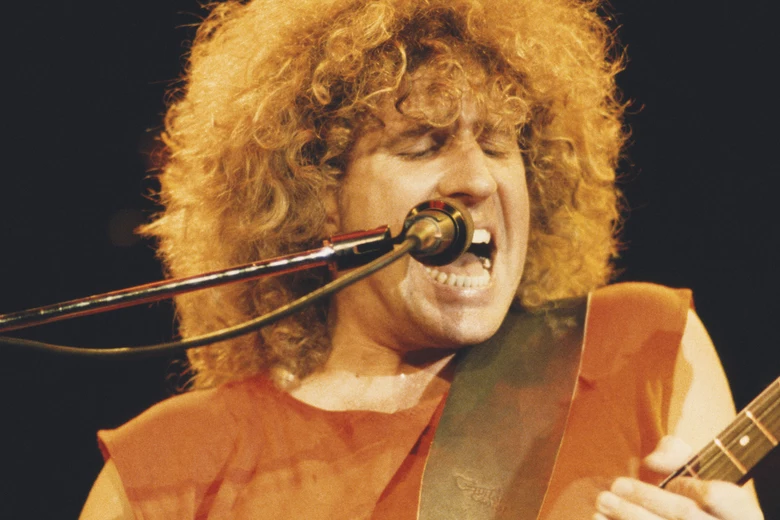
Before the “Hagar vs Roth” debates consumed half the rock world, Sammy had already built a reputation as one of the hardest-working live performers in America.
Most fans don’t realize how relentless those early tours really were.
By the time albums like Standing Hampton (1981) and Three Lock Box (1982) arrived, Sammy Hagar had spent years grinding through clubs, theaters, and mid-sized arenas. He wasn’t an overnight MTV creation. He earned his audience the old-fashioned way — one loud night at a time.
And those shows had a very specific personality.
Unlike some arena-rock acts of the era that leaned heavily into theatrical gimmicks, Sammy’s concerts felt more direct. More physical. There was always this California desert-highway vibe hanging over everything. Fast cars. Tequila. Loud guitars. Summer nights that never seemed to end.
The performances from the VOA era in 1984 especially captured that energy perfectly. “I Can’t Drive 55” became more than a hit single. It became a live anthem that audiences practically exploded for. Watch footage from those tours and you’ll notice something immediately: Sammy wasn’t performing at the crowd. He was charging into them emotionally.
That matters.
Because in many ways, Sammy Hagar’s best live performances weren’t about flawless vocals. They were about momentum. Feeling. Commitment.
The famous 1984 concert footage from St. Louis still holds up because the band sounds hungry. Sammy tears through “There’s Only One Way to Rock” like a guy trying to prove something every single night. And honestly, he probably was. The early ’80s hard rock scene was brutally competitive.
On the other hand, what made those solo shows special was the absence of ego-driven tension. Sammy genuinely looked like he loved being there. Even back then, audiences could feel it.
That joy became one of his trademarks.
The Monsters of Rock Shows Changed Everything
When Sammy joined Van Halen in 1985 after David Lee Roth left, fans weren’t just skeptical. Some were outright hostile.
Replacing Roth was basically impossible.
The original Van Halen lineup had become mythology by that point. The swagger. The danger. The party-band chemistry. Nobody thought another singer could survive that pressure, much less thrive under it.
Then came the live shows.
And suddenly people realized something important: Sammy Hagar wasn’t trying to be David Lee Roth.
He brought an entirely different energy.
The 1986 5150 tour arguably produced some of the greatest live performances of Sammy’s career because the band sounded revitalized. Eddie seemed inspired again. Alex Van Halen played with fresh aggression. Michael Anthony’s harmonies fit Sammy naturally. The chemistry surprised even longtime skeptics.
But the real turning point came during the Monsters of Rock festival performances in the late ’80s.
Those massive stadium shows revealed how powerful the Hagar-era Van Halen could become live. The band sounded bigger. More melodic. More musically expansive. Songs like “Dreams” and “Love Walks In” gave the concerts emotional peaks the Roth era rarely aimed for.
To be fair, some old-school fans hated that shift.
They wanted raw party rock. They wanted “Unchained” and “Everybody Wants Some!!” energy every second of the night. And honestly, I understand that argument. Roth-era Van Halen had a certain unrepeatable chaos.
But here’s the thing: Sammy-era Van Halen could hit emotional notes that earlier versions of the band never really explored.
Watch live performances of “Dreams” from 1986 or 1988. Sammy is absolutely pushing his voice to the limit while Eddie’s guitar soars underneath those huge keyboard layers. It feels triumphant. Almost cinematic. Arena rock at its absolute peak.
You could argue those concerts represented the high-water mark of polished American hard rock before grunge changed the landscape forever.
Live: Right Here, Right Now Captured the Band at Full Power
If someone asked me where to start with Sammy Hagar’s best live performances, I’d probably point them toward Live: Right Here, Right Now from 1993.
Not because it’s perfect.
Because it captures the band at full maturity.
By that point, Van Halen had fully evolved into a different animal than the early club days. The musicianship was outrageous. Eddie Van Halen was still capable of moments that sounded genuinely impossible. Sammy’s voice, while rougher around the edges than the ’80s, carried more emotional weight. The band had become tighter without losing too much spontaneity.
And the setlist? Absolutely stacked.
“Poundcake.” “Best of Both Worlds.” “Panama.” “Finish What Ya Started.” “Why Can’t This Be Love.” It’s basically a masterclass in how to pace an arena-rock show.
What’s interesting is how confident Sammy sounds throughout the performances. By 1993, he no longer felt like “the replacement singer.” He sounded fully embedded into Van Halen’s identity.
The version of “Right Now” from that era especially deserves attention. That song could have collapsed under its own ambition live. Huge keyboards. Big emotional vocals. Complicated arrangements. Instead, it became one of the defining concert moments of the Hagar years.
And then there’s Eddie.
Truth be told, this may have been the final period where fans consistently saw Eddie Van Halen fully healthy, focused, and creatively explosive onstage night after night. His playing during the For Unlawful Carnal Knowledge and Balance years still had the fire of the early days, but with added sophistication.
The chemistry between Eddie and Sammy during these performances feels genuine too. That’s the bittersweet part now. Later interviews and feuds make it easy to forget how connected they once appeared musically.
For a while there, they really worked.
Cabo Wabo Nights and the Return of the Party Spirit
After the breakup with Van Halen in 1996, something interesting happened to Sammy’s live performances.
They loosened up again.
The pressure disappeared.
Instead of trying to carry one of the biggest brands in rock history, Sammy returned to smaller-scale environments where personality mattered more than perfection. The Cabo Wabo Cantina performances in Mexico became legendary among hardcore fans because they captured Sammy in his most natural habitat.
No giant expectations. No internal band politics. Just music, tequila, friends, and crowds who wanted a good time.
And honestly, those shows revealed a different side of Sammy Hagar.
He became more conversational onstage. Funnier. Warmer. More willing to improvise. Some nights turned into all-night jam sessions featuring surprise guests and deep cuts that major arena tours rarely allowed.
What’s fascinating is that Sammy actually seemed happier during parts of this era than he did while fronting Van Halen.
Not bigger. Happier.
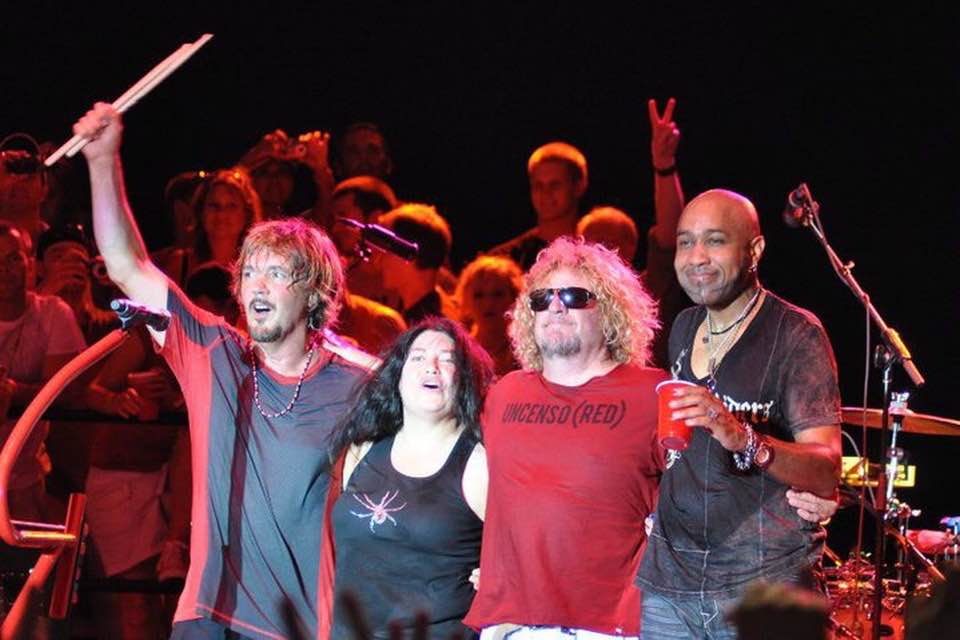
The annual Birthday Bash concerts in Cabo eventually became almost mythical for classic rock fans. You’d see appearances from musicians like Michael Anthony, Joe Satriani, Chad Smith, Neal Schon, and countless others. The vibe felt less corporate than most legacy-rock events.
More communal.
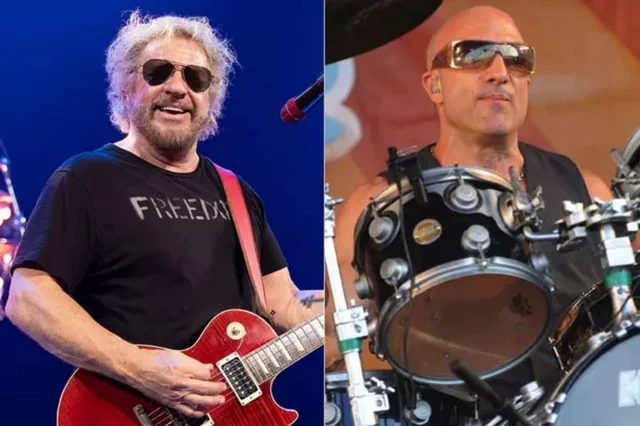
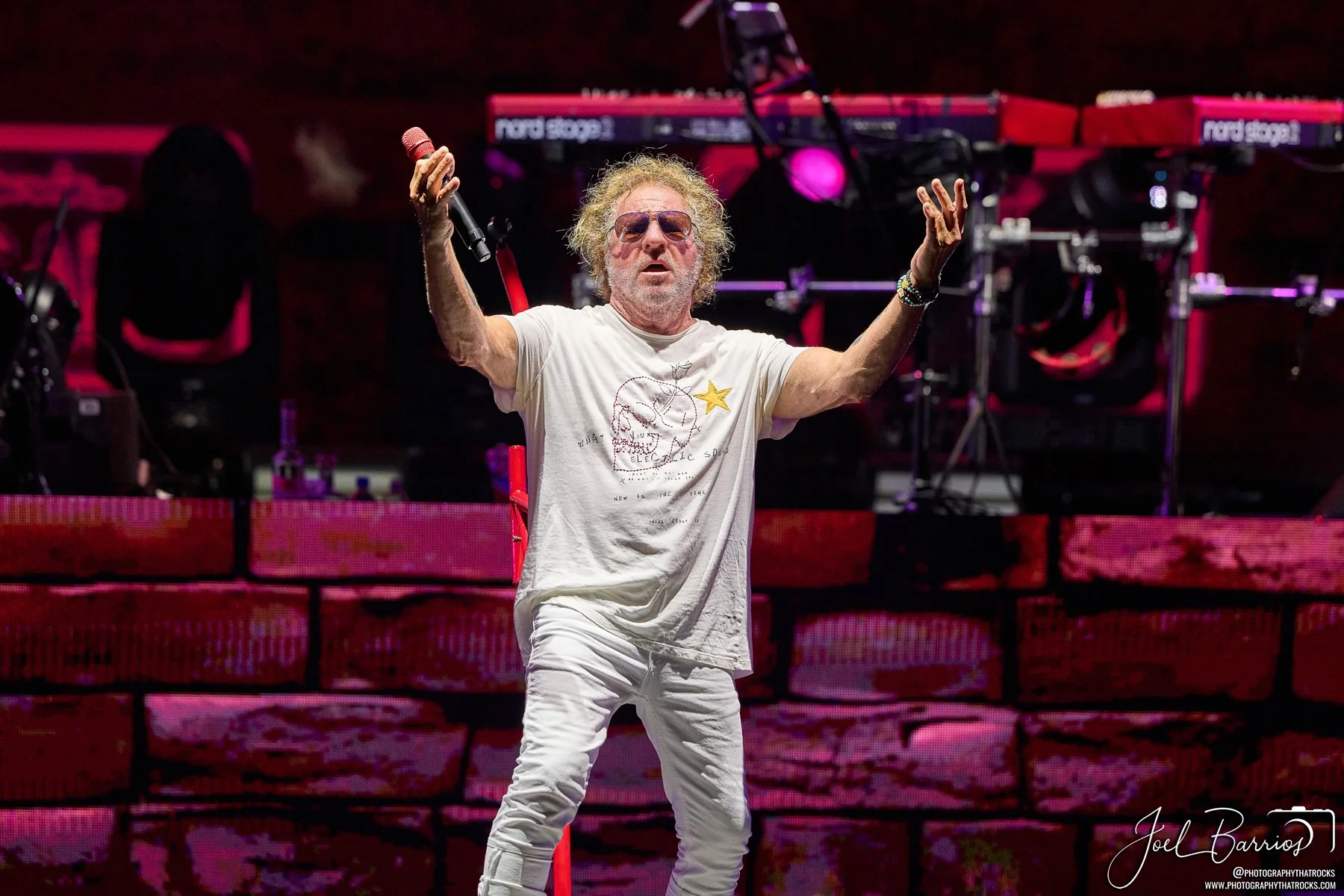
And because Sammy genuinely loves performing, audiences responded to that authenticity. Even when his voice lost some range with age — which happens to literally every rock singer eventually — the energy never disappeared.
If anything, fans appreciated the honesty more.
You weren’t watching a guy pretending he was still 28 years old. You were watching a rock veteran celebrating survival.
There’s something powerful about that.
Chickenfoot Proved Sammy Still Had Fire Left
By the late 2000s, many assumed Sammy Hagar had settled comfortably into nostalgia-act territory.
Then Chickenfoot happened.
And suddenly people remembered the guy could still absolutely bring it live.
The supergroup — featuring Joe Satriani, Michael Anthony, and Chad Smith — wasn’t just some casual side project thrown together for easy money. The band had real chemistry. Real aggression. Real humor. Their concerts felt unpredictable in the best possible way.
Most fans expected fun.
Few expected the level of musicianship they actually got.
Joe Satriani’s guitar work pushed Sammy differently than Eddie ever had. Less rhythmic chaos. More precision. More space. And Sammy responded by singing with surprising intensity for a guy already deep into his sixties.
Performances of “Oh Yeah,” “Soap on a Rope,” and “Big Foot” carried genuine swagger. But what really elevated Chickenfoot shows were the Van Halen songs.
Because suddenly Sammy was singing that material free from the emotional baggage surrounding Eddie Van Halen and the old band politics. The songs sounded liberated again.
The live version of “Best of Both Worlds” during Chickenfoot concerts often felt downright joyful. Fans weren’t arguing about eras in those moments. They were just celebrating the music.
And maybe that’s ultimately the thread connecting all the best Sammy Hagar live performances across five decades.
Joy.
Not irony. Not darkness. Not calculated coolness.
Joy.
That emotional openness made Sammy different from many of his peers in classic rock. Some critics dismissed it as lightweight over the years. I think they missed the point entirely.
Making thousands of people forget their problems for two hours is not lightweight. It’s rare.
And somewhere tonight, probably in a garage, at a backyard barbecue, or blasting through speakers on an American highway, somebody’s still throwing on a live Sammy Hagar performance because it reminds them of who they were when rock music felt limitless.
Honestly, that’s about as powerful a legacy as any frontman could hope for.