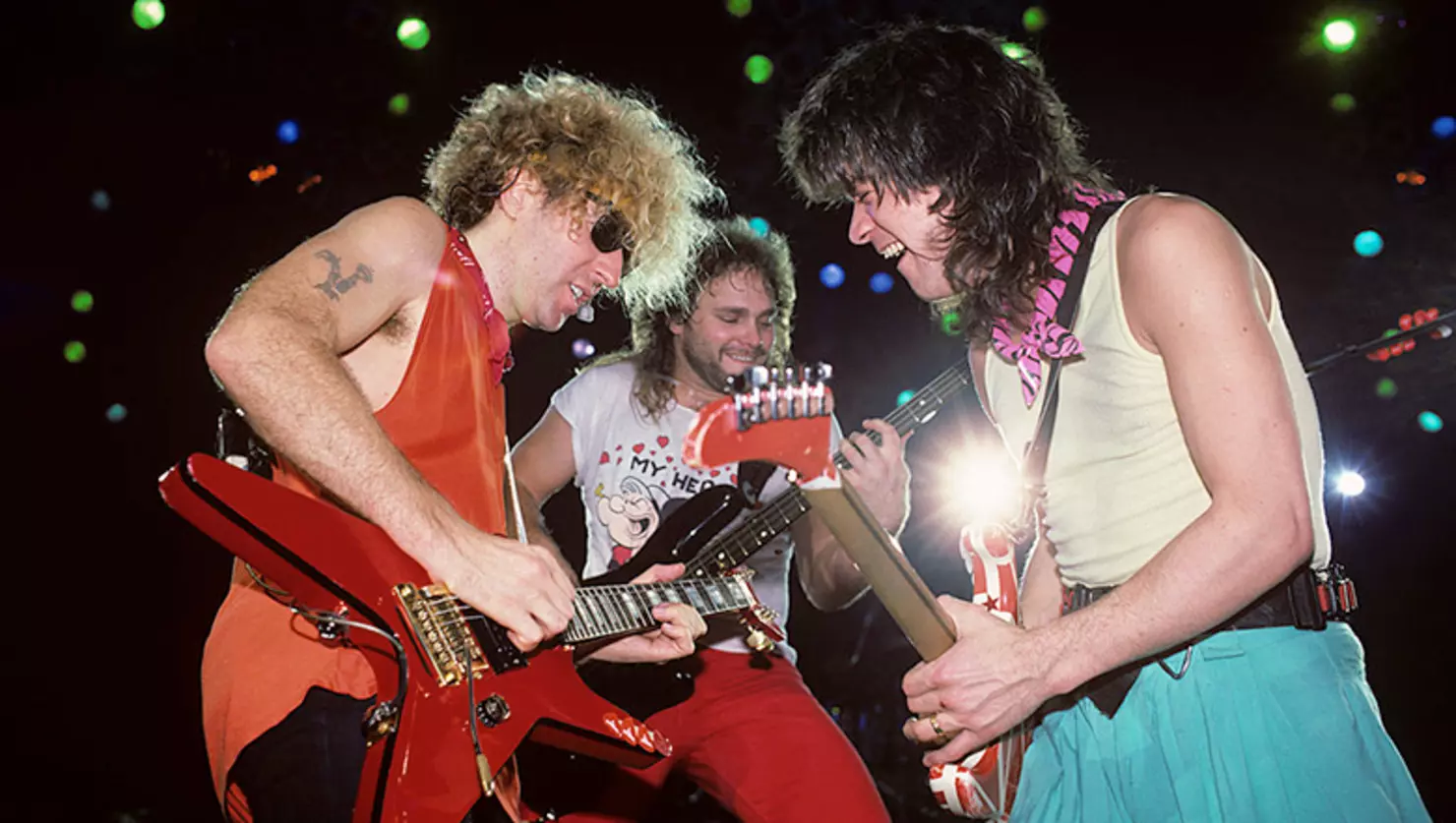
Sammy Hagar’s best guitar songs are not just the obvious radio bruisers. Sure, “I Can’t Drive 55” belongs in the conversation — how could it not? — but the real story runs deeper, from the proto-metal thunder of Montrose to the big-money, big-chorus roar of Van Halen, and then into the leaner, road-tested fire of his later solo years. Sammy Hagar was never trying to be Eddie Van Halen. That would’ve been foolish. His gift was different: he knew how to build a rock song around a riff that felt like gasoline, chrome, and Friday night freedom. And truth be told, that matters just as much.
Before the Red Rocker: “Bad Motor Scooter” and the Montrose Blueprint
If you want to understand why guitar players still talk about Sammy Hagar with respect, start with “Bad Motor Scooter” from Montrose. That 1973 debut by Montrose was one of those records that didn’t merely sound loud — it sounded like the future kicking open a garage door. Ronnie Montrose’s slide-guitar motorcycle effect was pure theater, but the riff underneath had muscle, swagger, and economy. Hagar, still young and hungry, sang like he was trying to outrun the whole decade.
Most fans don’t realize how much that record mattered to later American hard rock. Hagar has said Eddie Van Halen was a “Montrose freak,” and that Eddie absorbed some of Ronnie’s huge open-chord approach — not the soloing so much as the way one guitar could sound enormous. That little detail changes the whole Hagar vs Roth argument, because Hagar wasn’t some outsider walking into Van Halen in 1985. In many ways, his DNA was already in the building. ([Wikipedia][1])
“There’s Only One Way to Rock”: Sammy Hagar Finds His Own Guitar Gospel
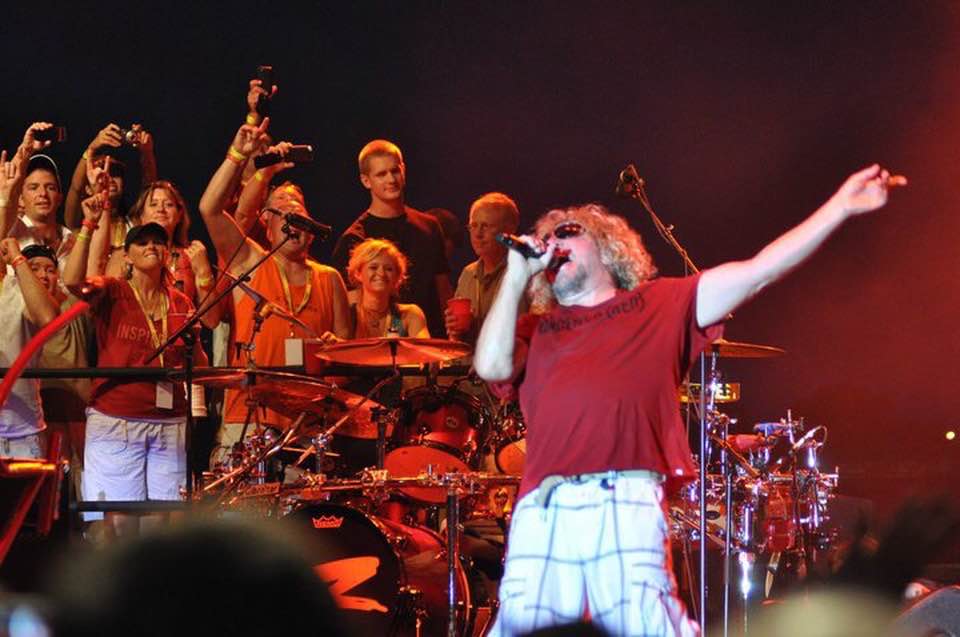
By the time Hagar cut “There’s Only One Way to Rock” for Standing Hampton, he had figured out exactly what kind of rock star he wanted to be. Not mysterious. Not artsy. Not pretending the riff was some sacred puzzle. Just direct, loud, melodic, and built for people who still believed a guitar could settle an argument.
Here’s the thing: this song is almost comically simple on paper. A pounding rhythm, a shout-along title, a solo that doesn’t overstay its welcome. But that’s the genius. Hagar’s guitar songs often work because they don’t apologize for being obvious. “There’s Only One Way to Rock” became a mission statement, and onstage it turned into something close to a sermon for beer-soaked arenas.
Standing Hampton went platinum and became Hagar’s biggest solo breakthrough to that point, helping push him from respected hard-rock lifer into full-blown Red Rocker territory. It wasn’t just a hit record. It was proof that Sammy Hagar songs could carry both radio hooks and guitar authority without sounding watered down. ([Wikipedia][2])
“I Can’t Drive 55”: The Riff That Turned Frustration Into Classic Rock Myth
“I Can’t Drive 55” is the one your uncle still cranks in the pickup, and honestly, he’s right. Released on VOA, it took one of the most ordinary American irritations — being told to slow down — and turned it into a national hard-rock tantrum. That’s not a small achievement.
The guitar part is not flashy in the Eddie Van Halen sense. It doesn’t levitate. It punches. The riff is clipped, impatient, and perfectly matched to the lyric. You can practically hear Hagar gripping the steering wheel. And if you think about it, that’s why the song lasted. It wasn’t just about speed limits. It was about being middle-American, overworked, under-thrilled, and desperate for a little rebellion that didn’t require a manifesto.
To be fair, some fans hear “I Can’t Drive 55” and think novelty. I get it. The video was goofy. The hook is massive. But the track’s guitar engine is serious business, and VOA going platinum says plenty about how deeply it connected. Among Sammy Hagar’s best guitar songs, this is the commercial monster — the one that made the Red Rocker impossible to ignore. ([Wikipedia][2])
“Summer Nights”: When Hagar Walked Into 5150 and the Band Changed Shape
The first time Hagar jammed with Van Halen at Eddie’s 5150 studio, the story gets almost too perfect. According to accounts of the sessions, the band kicked into what became “Summer Nights,” and Hagar started building lyrics and melody on the spot. Eddie later recalled that in about 20 minutes they had a complete song, and everyone freaked out. Hagar has told a similar version: he started singing the chorus, and the room realized, wait — this guy can really sing. ([Guitar World][3])
That matters because “Summer Nights” is not just a good Van Halen track. It’s the sound of a band discovering a new language in real time. Eddie’s guitar is bright, elastic, and restless, while Hagar brings a beach-town optimism that David Lee Roth never would’ve delivered in quite the same way. Roth would’ve winked. Sammy meant it.
On 5150, that difference became the whole point. The album was released in 1986 and became Van Halen’s first No. 1 album on the Billboard 200, launching the so-called Van Hagar era and permanently dividing barroom arguments across America. ([Guitar World][3])
“Best of Both Worlds”: The Van Hagar Riff That Still Wins Over Skeptics
If somebody tells you they hate the Hagar years, play “Best of Both Worlds” loud and watch their face. They may not admit it, but that riff gets in. It has the bounce of old Van Halen, the polish of mid-’80s arena rock, and one of Hagar’s most confident vocal performances with the band.
What’s interesting is how neatly the song answers the Hagar vs Roth debate without really trying. Roth-era Van Halen was danger, flash, comedy, and California sleaze. Hagar-era Van Halen was bigger, more emotional, more radio-friendly, and sometimes more sincere than cool. “Best of Both Worlds” lands right in the middle. Eddie’s guitar still has that grin, but Sammy’s lyric points forward instead of sideways.
Released as a single from 5150 in 1986, the song became one of the defining guitar-driven moments of the new lineup. Critics at the time noticed the combination of Eddie’s guitar charge and Hagar’s vocal strength, and fans have kept it alive because it simply feels good. Not guilty-pleasure good. Good good. ([Wikipedia][4])
“Poundcake”: Eddie’s Drill, Sammy’s Swagger, and the Sound of 1991 Muscle
“Poundcake” is where Van Halen’s Hagar era got heavier, meaner, and less interested in proving anything to anybody. By 1991, the band had already survived the first wave of skepticism. For Unlawful Carnal Knowledge arrived like a statement: less keyboard gloss, more guitar weight, more teeth.
And then there’s that drill. Eddie using a power drill against the strings could’ve been a gimmick in lesser hands, but on “Poundcake” it becomes part of the song’s dirty mechanical personality. The main riff is thick and grinding, Alex Van Halen’s drums sound like heavy machinery, and Hagar sings with that half-smirk, half-shout delivery he owned in this period.
The album was released June 17, 1991, debuted at No. 1 on the Billboard 200, and held the top spot for three weeks. It later earned Van Halen a Grammy for Best Hard Rock Performance, which is still wild to think about considering how often critics treated this band like a party trick with amplifiers. For Unlawful Carnal Knowledge proved otherwise. ([Wikipedia][5])
“Judgement Day” and “The Dream Is Over”: The Darker Edge of the Hagar Years
Most casual fans remember the Hagar era for “Why Can’t This Be Love,” “Right Now,” and the big sunny choruses. Fair enough. But if we’re talking Sammy Hagar’s best guitar songs, “Judgement Day” and “The Dream Is Over” deserve more love than they usually get.
“Judgement Day” is Eddie in attack mode — fast, sharp, almost anxious. It doesn’t have the loose backyard-party feel of early Van Halen. It sounds like a band tightening its fists. Hagar responds by pushing his voice harder, less beach-bum philosopher and more street-corner preacher. “The Dream Is Over,” on the other hand, carries a different weight. It’s still muscular, but there’s disillusionment in it, a sense that the American good-time machine was starting to cough smoke.
That’s part of why For Unlawful Carnal Knowledge has aged better than some people expected. Beneath the glossy videos and big choruses, there’s real tension. The 2024 expanded edition even highlighted unreleased material and concert footage from the December 4, 1991 Dallas show, reminding fans how powerful that tour really was. ([RedRocker][6])
“Top of the World”: The Feel-Good Riff With a Shadow Behind It
“Top of the World” sounds like a victory lap, and in some ways it was. The riff nods back to the ending of “Jump,” the chorus is pure skyward Hagar, and the whole thing feels designed for an arena full of raised arms. It’s one of those Van Halen songs that can make a parking lot feel like a summer festival.
But on the other hand, listen closely and there’s something bittersweet about it now. This was the early ’90s. Grunge was coming. The culture was shifting. The old gods of classic rock and arena metal were about to find out that the party had a curfew. Van Halen still sounded huge, but the ground underneath them was moving.
That’s why “Top of the World” works as more than a happy rocker. It captures a band at the summit, still grinning, still swinging, maybe not fully aware that the mountain was about to change shape. Hagar’s voice sells the optimism. Eddie’s guitar gives it lift. Together, they make denial sound glorious.
“Amsterdam” and “The Seventh Seal”: Balance Gets Heavier Than People Remember
Balance is a complicated record. Some fans love its darker tone; others hear a band starting to strain under internal pressure. Both readings can be true. But from a guitar standpoint, “Amsterdam” and “The Seventh Seal” are essential.
“The Seventh Seal” opens the album with an almost cinematic seriousness. Eddie’s riff is massive, coiled, and dramatic, while Hagar leans into a more spiritual, searching vocal. It’s not party music. It’s not “Panama” with a different singer. It’s grown men making heavy rock in the mid-’90s and refusing to pretend nothing had changed.
“Amsterdam,” meanwhile, is looser and nastier, built around a riff that feels both playful and slightly dangerous. Hagar’s lyrics got some grief — even Eddie reportedly wasn’t crazy about certain lines — but the track still has undeniable guitar muscle. In my opinion, Balance is where the Hagar-era Van Halen machine starts showing cracks, but those cracks let some interesting darkness through. The album still hit No. 1 and went multi-platinum, which says the audience had not walked away. ([Wikipedia][2])
After Van Halen: Chickenfoot and the Joy of Playing Loud Again
When Hagar joined forces with Joe Satriani, Michael Anthony, and Chad Smith in Chickenfoot, plenty of fans were skeptical. Supergroups can feel like fantasy-football rosters: impressive names, questionable chemistry. But Chickenfoot worked because it sounded like guys enjoying the room.
“Oh Yeah” is the obvious guitar song, with Satriani laying down a riff that’s bluesy, cocky, and built for Hagar’s voice. It doesn’t try to be Van Halen, which is smart. Nobody wins that comparison. Instead, it gives Sammy a different kind of guitar foil — less brown sound, more precision rocket fuel.
The first Chickenfoot album came out in 2009 and reached the Top 5 in the U.S., later going gold. That matters because it proved Hagar’s guitar-rock instincts still had an audience long after the old MTV ecosystem disappeared. The man knew where the riff lived. He kept finding it. ([Wikipedia][2])
Why Sammy’s Best Guitar Songs Still Matter
The easy version of rock history says Sammy Hagar was the guy who replaced David Lee Roth, sold a ton of records, and made Van Halen more polished. That version isn’t wrong, exactly. It’s just too small. Sammy Hagar’s best guitar songs tell a bigger story — one about American hard rock learning how to survive changing decades without losing its grin.
From Montrose to “I Can’t Drive 55,” from “Summer Nights” to “Poundcake,” Hagar kept putting his voice in front of riffs that felt physical. You didn’t analyze them first. You felt them in the shoulders. And maybe that’s why fans still argue so fiercely about him. The Hagar vs Roth debate was never only about singers. It was about what people wanted Van Halen — and classic rock itself — to mean.
For some, Roth will always be the original spark. No argument. But for others, Hagar gave the music heart, range, and a second life that nobody had any right to expect. Put on “Best of Both Worlds” or “There’s Only One Way to Rock” with the windows down, and the debate suddenly feels less important than the volume knob. That’s the real test, isn’t it? Does the song still make you reach over and turn it up? With Sammy, more often than his critics admit, the answer is yes.