Rock history is filled with artists who had one great run and then slowly disappeared into nostalgia tours, bad contracts, or public burnout. Sammy Hagar never really followed that script. That’s part of what makes Sammy Hagar’s comeback moments so fascinating. Every time people thought he’d peaked — or worse, become irrelevant — he somehow found another gear.
And honestly, not all of those comebacks were commercial. Some were emotional. Some were creative. A few were deeply personal. That’s what separates Hagar from a lot of classic rock survivors. The guy didn’t just keep showing up. He kept finding new ways to matter.
Truth be told, Sammy’s entire career feels like one long argument against the idea that rock musicians only get one defining chapter. Montrose should’ve been enough for one lifetime. Then came the solo years. Then Van Halen. Then Cabo Wabo. Then more tours, more bands, more reinvention. Every decade seemed to produce another moment where the Red Rocker proved people wrong again.
And for fans who grew up with this music, those rebounds hit differently now. Because they feel less like celebrity stories and more like lessons in endurance.
Rebounding From Montrose Could’ve Broken Him — Instead It Built the Red Rocker
When Sammy Hagar left Montrose in 1974, the future looked uncertain at best.
Today, the self-titled Montrose debut is considered one of the defining American hard rock albums of the 1970s. Songs like “Rock Candy” and “Bad Motor Scooter” carried enormous influence, especially among guitar-driven bands that followed. But back then, leaving the group meant walking away from the strongest platform Hagar had ever known.
And honestly, a lot of singers never recover from that kind of split.
The music industry was brutal in the mid-’70s. Punk was emerging. Radio trends were shifting fast. Solo careers failed constantly. Yet Sammy kept grinding through endless tours and gradually built an audience the hard way — city by city, club by club.
What’s interesting is how those difficult years shaped the entire Red Rocker identity. Albums like Street Machine and Danger Zone sounded hungry. Restless. Determined. Hagar wasn’t chasing trends. He was fighting for survival.
Most fans don’t realize how close he came to staying a respected cult figure instead of becoming a mainstream rock star. But the comeback started slowly there — through persistence rather than instant success.
And honestly, that persistence became one of the defining themes of his entire career.
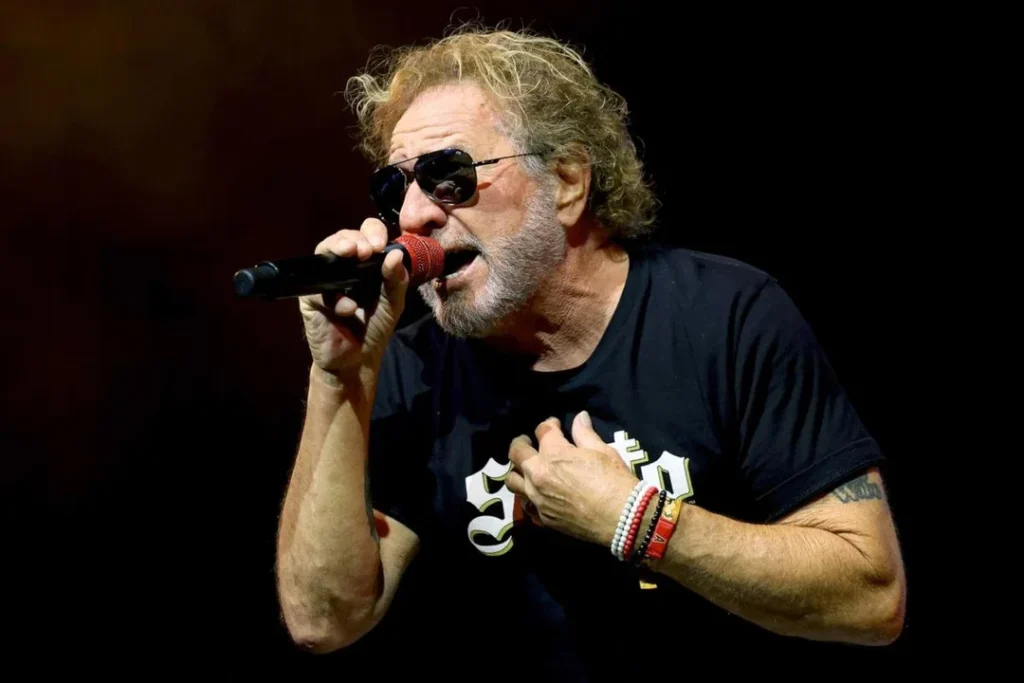
“I Can’t Drive 55” Turned Sammy Into a Major Star Overnight
By the early 1980s, Sammy Hagar had respect within hard rock circles, but mainstream superstardom still felt frustratingly out of reach.
Then came VOA in 1984.
And suddenly everything changed.
“I Can’t Drive 55” exploded across MTV and rock radio with perfect timing. The song was funny, rebellious, ridiculously catchy, and completely aligned with the larger-than-life Red Rocker image Hagar had been building for years. Fast cars. Loud guitars. California freedom. It all clicked instantly.
Truth be told, this was one of the most important comeback moments in Sammy Hagar’s career because it transformed him from hardworking veteran into national rock personality almost overnight.
And here’s the thing: the success didn’t feel manufactured.
A lot of ’80s rock stars chased image first and music second. Hagar’s appeal felt more organic. Fans believed him. When he screamed about speeding tickets and freedom, it sounded like something he’d actually lived — because he had.
What’s fascinating is how this breakthrough positioned him perfectly for the next impossible challenge waiting around the corner.
Replacing David Lee Roth in Van Halen.
Joining Van Halen Was Either Career Suicide or Career Resurrection
Depends who you ask.
When Sammy Hagar joined Van Halen in 1985, many fans assumed disaster was inevitable. Roth-era Van Halen wasn’t just a band. It was practically a religion for rock audiences. Replacing David Lee Roth felt unthinkable emotionally.
And honestly, Hagar knew it too.
That’s part of why the success of 5150 became such a massive comeback story in rock history. Instead of collapsing under the pressure, Sammy helped push Van Halen into an entirely new era commercially and creatively. “Dreams.” “Why Can’t This Be Love.” “Love Walks In.” The band suddenly sounded bigger, more melodic, arguably more emotionally ambitious.
To be fair, the Hagar vs Roth debate never disappeared. Some fans still believe Van Halen lost its dangerous edge during the Sammy years. Others think Eddie Van Halen reached new musical heights because Hagar could support more sophisticated songwriting.
But commercially? The comeback was undeniable.
Four consecutive No. 1 albums. Massive stadium tours. Constant MTV rotation. Hagar didn’t just survive replacing Roth. He helped keep Van Halen dominant into the 1990s while many classic rock bands faded under the rise of grunge.
That alone would’ve cemented most careers forever.
After the Ugly Van Halen Split, Sammy Found a New Identity
The 1996 breakup with Van Halen could’ve easily become the end of Sammy Hagar’s mainstream relevance.
The split turned ugly fast. Public accusations. Media drama. Emotional fallout. Fans choosing sides again. The entire situation felt exhausting even from the outside. And honestly, many people assumed Hagar’s biggest years were officially behind him.
Instead, he reinvented himself again.
His 1997 album Marching to Mars didn’t become a blockbuster, but it revealed a more reflective and emotionally layered side of his songwriting. Songs like “Little White Lie” carried anger and heartbreak without sounding bitter for the sake of bitterness.
Meanwhile, Sammy quietly built the Cabo Wabo tequila empire into one of the most successful celebrity alcohol brands in entertainment history.
That mattered culturally.
Most fans don’t realize how revolutionary Hagar’s business success looked at the time. Before George Clooney or Ryan Reynolds turned celebrity liquor into a business model, Sammy Hagar had already done it. And unlike some celebrity ventures, Cabo Wabo felt authentic because the lifestyle genuinely matched his personality.
Truth be told, this comeback wasn’t about proving critics wrong musically. It was about proving he could evolve beyond the narrow identity of “former Van Halen singer.”
And he absolutely did.
Chickenfoot Reminded Fans Sammy Could Still Rock Hard
By the late 2000s, many classic rock stars had settled comfortably into predictable nostalgia circuits. Greatest hits. Safe tours. Minimal creative risk.
Then Chickenfoot showed up.
The supergroup — featuring Sammy Hagar, Joe Satriani, Michael Anthony, and Chad Smith — sounded genuinely energized from the beginning. The 2009 debut album carried real bite. Loud riffs. Big hooks. Swagger without feeling overly calculated. And perhaps most importantly, it reminded fans that Sammy could still front an aggressive rock band convincingly decades into his career.
What’s interesting is how relaxed Hagar sounded creatively during this era.
There wasn’t the pressure of carrying Van Halen mythology anymore. No constant Hagar vs Roth comparisons dominating every conversation. Chickenfoot felt like musicians playing because they genuinely enjoyed each other’s company and still loved rock music.
And audiences responded.
For longtime fans, it became another reminder that Sammy Hagar’s comeback moments weren’t isolated events. Reinvention had basically become his natural state by that point.
Especially compared to peers who struggled adapting creatively as they aged.
The Best of All Worlds Era Became an Emotional Comeback Too
The story gets more emotional here.
After Eddie Van Halen died in 2020, many fans assumed the emotional wounds surrounding the Hagar-era Van Halen years would remain unresolved forever. The history felt too complicated. Too painful. Too loaded with regret and unfinished business.
Then something shifted.
As Hagar began openly celebrating the Van Halen catalog again through projects like the Best of All Worlds tour, the mood changed from conflict toward appreciation. Fans who once argued endlessly about Roth versus Hagar started reconnecting emotionally with the music itself.
Songs like “Right Now,” “5150,” and “Dreams” suddenly carried different weight.
Not debate. Memory.
Truth be told, this may be one of the most meaningful comeback moments of Sammy Hagar’s life because it wasn’t really about charts or money anymore. It was about reclaiming joy from complicated history. About honoring Eddie Van Halen while still acknowledging the pain that existed between them.
And honestly, that emotional honesty resonates deeply with classic rock audiences now.
Because fans are older too. They understand regret better. Reconciliation too.
Somewhere out there tonight, somebody’s driving with “Dreams” blasting through the speakers again after years of avoiding it because the memories felt complicated. And maybe that’s the real secret behind Sammy Hagar’s comeback story.
The guy never stopped finding ways to reconnect people with the feeling that rock and roll could still mean something personal.