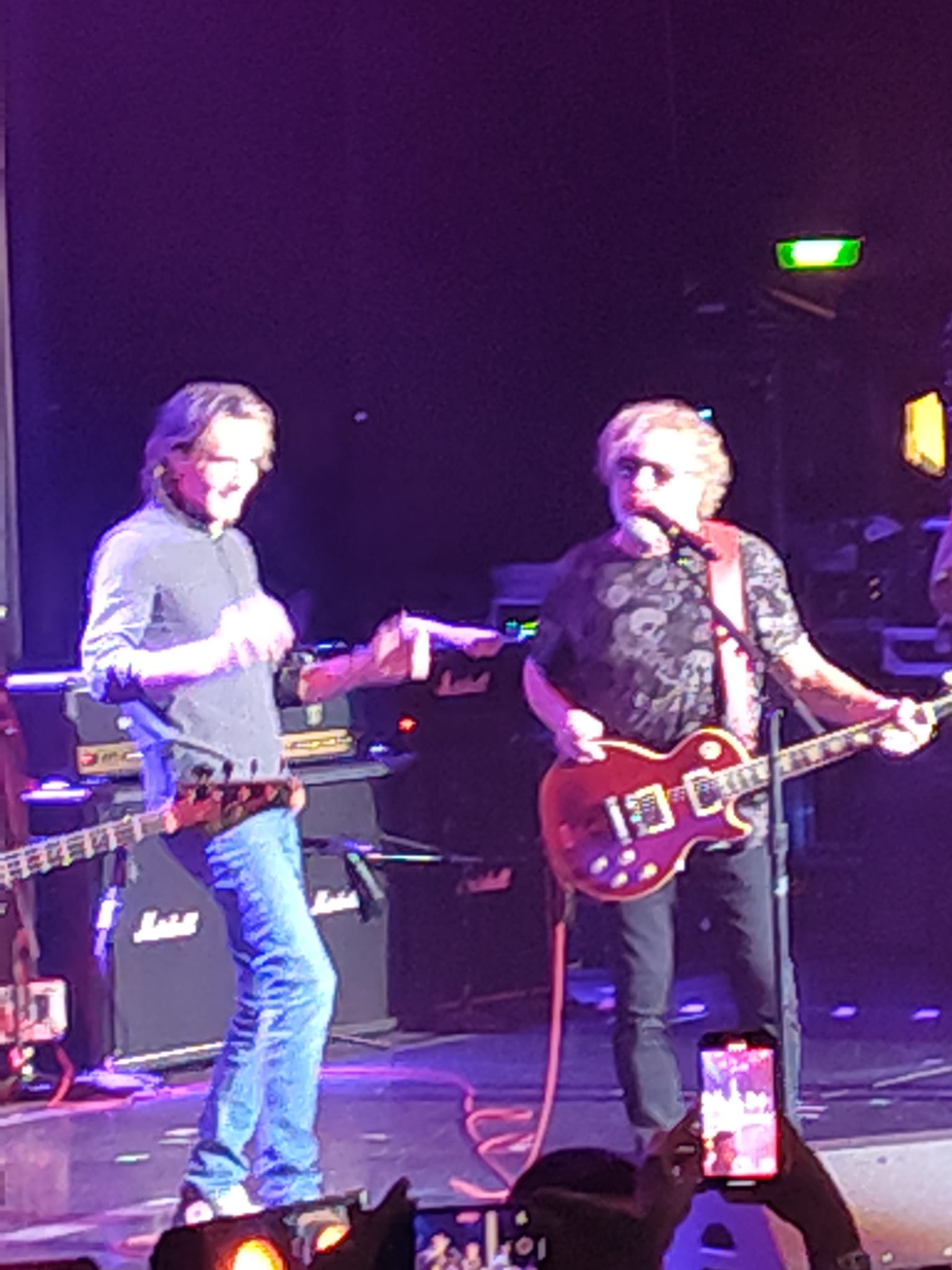
Every classic rock fan eventually reaches that point.
You’ve played the obvious tracks a thousand times. I Can’t Drive 55 still rules the highway. “Right Now” still hits emotionally. “Dreams” still feels massive. But then curiosity kicks in. You start digging deeper into Sammy Hagar’s catalog looking for the songs casual listeners missed entirely.
And honestly, that’s where things get really interesting.
Because Sammy’s career stretches far beyond the giant radio hits tied to Van Halen or the Red Rocker image. Hidden inside decades of albums, soundtrack appearances, B-sides, forgotten live recordings, and overlooked solo records are songs that reveal completely different sides of him — emotional, experimental, vulnerable, weird, aggressive, reflective.
Truth be told, some of Sammy Hagar’s rare songs say more about him artistically than the hits ever could.
That’s why hardcore fans become obsessed with tracking them down.
Not because they’re obscure for the sake of obscurity. Because they feel personal. Unearthed. Like discovering private conversations hidden underneath the louder mythology surrounding Ferraris, Cabo Wabo, and endless “Hagar vs Roth” arguments.
And honestly, those deeper cuts often age beautifully.
“Eagles Fly” Revealed a Different Sammy Entirely
One of the most beloved rare Sammy Hagar songs among longtime fans is Eagles Fly.
And honestly, calling it merely “rare” almost feels strange because hardcore fans absolutely adore this track. Yet compared to the massive Van Halen singles, it remains criminally underappreciated by casual listeners.
Originally appearing on 1987’s I Never Said Goodbye, the song stripped away much of the usual arena-rock bombast and leaned into something softer, more reflective, almost spiritual emotionally. Sammy reportedly wrote it during a difficult transitional period while balancing solo identity and his growing role inside Van Halen.
You can hear that emotional uncertainty all over the performance.
What’s interesting is how exposed Sammy sounds vocally. No giant party-rock swagger. No playful Red Rocker energy. Just sincerity. The melody floats instead of attacks. The lyrics feel introspective in ways many fans didn’t expect from him at the time.
And honestly, that vulnerability may be exactly why the song became such a cult favorite later.
Most fans believe “Eagles Fly” hinted at the emotional direction Sammy would bring into Van Halen songs like “When It’s Love” and “Right Now.” Looking back now, the connection feels obvious.
But at the time? It surprised people.
Especially those who only associated Sammy with fast cars and tequila-fueled rock anthems.

“Returning of the Wish” Showed His Experimental Side
Here’s a track many casual fans have never even heard of:
Returning of the Wish.
Truth be told, this song feels almost like Sammy wandering briefly into science-fiction progressive rock territory, and honestly, it’s fascinating. Released on the Danger Zone album in 1980, the track combined heavy guitars with cosmic imagery and atmospheric storytelling that felt wildly different from straightforward radio-rock material.
And somehow it worked.
What’s interesting is how ambitious Sammy sounded during this era. Before joining Van Halen, he often experimented more than people remember. Certain songs flirted with fantasy themes, layered arrangements, and emotional moods that didn’t fit neatly into hard-rock formulas.
“Returning of the Wish” especially feels like a hidden doorway into an alternate version of Sammy Hagar’s career — one where he leaned further into conceptual songwriting rather than pure arena-rock accessibility.
To be fair, not every fan connected with that side of him. Some listeners preferred direct, high-energy tracks like “There’s Only One Way to Rock.” But honestly, these experimental moments make the catalog richer now.
Because they prove Sammy wasn’t emotionally or creatively one-dimensional.
And if you think about it, the willingness to experiment probably helped him later when working alongside Eddie Van Halen, whose own musical instincts constantly pushed beyond standard hard-rock boundaries.
“Little White Lie” Became a Post-Van Halen Confession
After leaving Van Halen in 1996, Sammy released Marching to Mars in 1997.
And honestly, the entire album deserves more attention from classic rock fans.
But one song in particular — Little White Lie — became an emotional lightning rod among hardcore listeners. Casual fans sometimes know it vaguely. Dedicated fans understand how loaded the song actually feels.
Because whether Sammy officially confirmed every lyrical interpretation or not, most listeners heard the Van Halen breakup all over it.
The frustration. The betrayal. The exhaustion. The anger barely held together underneath the guitars.
And vocally? Sammy sounds wounded in a way he rarely allowed himself to sound publicly before.
That honesty turned the track into something bigger than a standard post-breakup rock song. It became emotional evidence from one side of one of classic rock’s most famous band implosions.
What’s fascinating is how the song aged.
Back then, fans mostly heard bitterness. Today, after Eddie Van Halen’s death and years of reflection, the track feels sadder somehow. More human. Less about winning arguments and more about damaged relationships between people who once created incredible music together.
That emotional complexity gives “Little White Lie” real staying power among deep-cut fans.
The Early Montrose Material Still Feels Dangerous
Before the solo hits, before Van Halen, before Cabo Wabo — there was Montrose.
And honestly, some of Sammy’s rarest emotional energy lives inside those early recordings.
Tracks like “Space Station No. 5,” “Good Rockin’ Tonight,” and deeper Montrose cuts still sound raw in ways later Sammy Hagar material sometimes intentionally polished out. The band’s self-titled 1973 debut carried a hungry, aggressive edge that many classic rock fans now view as proto-heavy-metal territory.
What’s interesting is how young Sammy sounds emotionally during those recordings.
Not immature. Hungry.
You can hear ambition colliding with working-class frustration in real time. The vocals attack harder. The swagger feels less relaxed than later Red Rocker years. Even the production carries a roughness that makes the songs feel dangerous decades later.
Most fans don’t realize how influential those Montrose records became for future hard-rock musicians either. Countless guitar players and singers later cited the band as foundational to American hard rock evolving during the 1970s.
And honestly, discovering the deeper Montrose catalog feels almost surreal for fans who first encountered Sammy through polished Van Halen-era hits.
It’s the same voice.
But emotionally, it’s a completely different phase of life.

Soundtracks, Live Cuts, and Forgotten Collaborations Matter Too
One reason Sammy Hagar’s rare songs remain so fascinating is because they’re scattered everywhere.
Movie soundtracks. Live albums. Guest appearances. B-sides. One-off collaborations. Some tracks never became mainstream partly because they arrived outside traditional studio albums entirely.
Take Heavy Metal from the animated film Heavy Metal. Hardcore fans absolutely love it, but casual listeners often overlook it completely compared to the bigger solo hits.
And honestly, the song rules.
Fast. Loud. Pure early-’80s energy. It captures Sammy at full Red Rocker intensity before the Van Halen years reshaped his public identity. The soundtrack context almost made the track feel like cult material from the beginning.
Then there are the live recordings.
Truth be told, some of Sammy’s best performances only exist in unofficial or lesser-known live releases where the emotional looseness of the performance matters more than perfection. Certain Cabo Wabo Birthday Bash jams became legendary precisely because they felt temporary and spontaneous.
That scarcity adds emotional value.
Classic rock fans love discovering moments that feel hidden from mainstream history. Songs that belong more to dedicated listeners than corporate playlists.
And Sammy’s catalog contains more of those moments than people sometimes realize.
Why Rare Sammy Hagar Songs Matter More Now
Honestly, rare songs become more meaningful as artists age.
The hits stay famous forever, but the deeper cuts start revealing personality. Contradictions. Vulnerability. Artistic curiosity. Hidden emotional layers casual listeners never noticed initially.
That’s especially true with Sammy Hagar.
Because the public image sometimes oversimplified him into “the fun rock guy.” Ferraris. Tequila. Parties. Loud choruses. Yet buried throughout the catalog are songs full of reflection, experimentation, sadness, hope, confusion, and emotional risk.
And maybe those rare tracks matter more now because fans hear them differently with age too.
Somewhere tonight, somebody’s pulling up an old Sammy deep cut on YouTube after midnight, headphones on, rediscovering a forgotten version of themselves through music they haven’t heard in twenty years.
That’s the magic of rare songs.
Not just hearing something obscure.
Feeling like the artist briefly stopped performing for the world and started speaking directly to you instead.