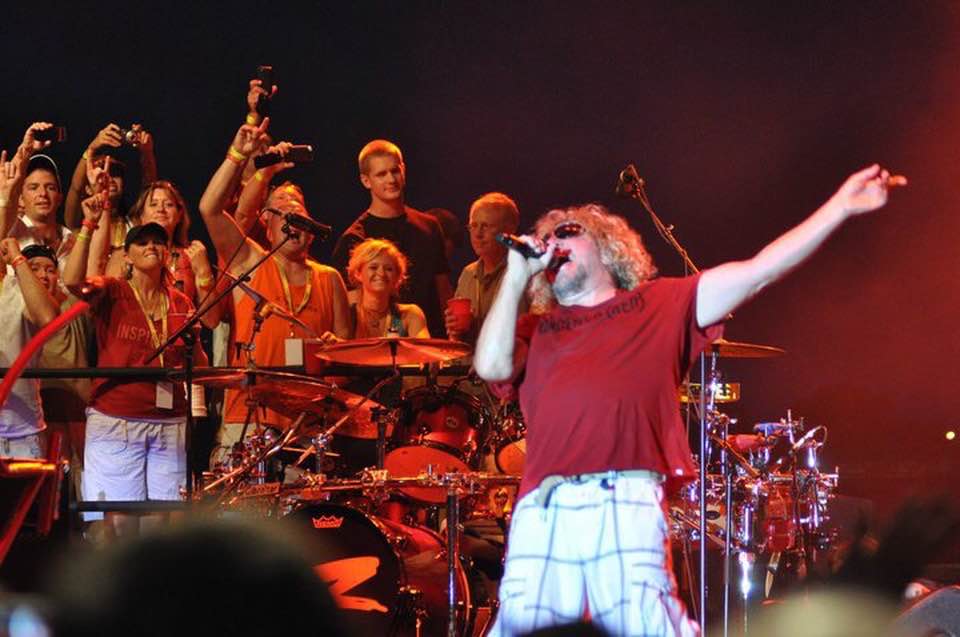
The first time you really hear Sammy Hagar at full power, something becomes obvious immediately: the guy sings like he means every word.
Not every rock vocalist does.
Some singers hide behind attitude. Some rely on technical perfection. Others survive almost entirely on image. But Sammy Hagar always sounded emotionally exposed in a way that separated him from many of his hard-rock peers. Loud, yes. Aggressive sometimes. But there was warmth underneath it. Optimism too. Even during the heavier moments.
That’s a huge reason fans still argue so passionately about him decades later.
Because the whole “Hagar vs Roth” debate was never only about Van Halen. It was about two completely different ideas of what a rock frontman should be. And whether you preferred David Lee Roth or Sammy usually came down to what kind of emotional connection you wanted from rock music itself.
Truth be told, Sammy Hagar’s uniqueness as a singer had less to do with vocal range alone and more to do with emotional personality. He sounded like freedom. Like California highways at sunset. Like surviving hard years and still deciding life was worth celebrating loudly.
And honestly, very few singers ever pulled that off convincingly.
Sammy Hagar Had One of Rock’s Most Instantly Recognizable Voices
Some singers become recognizable because of weird quirks or theatrical tricks. Sammy’s voice stood out for the opposite reason.
Clarity.
Even at full scream, you could understand him.
That matters more than people realize in hard rock. Especially during the late ’70s and ’80s, when many metal and arena-rock singers leaned heavily into exaggerated vocal styles that sometimes sacrificed emotional connection for sheer power. Sammy could absolutely hit huge notes, but he rarely lost the humanity underneath them.
Listen to early Montrose tracks like “Rock Candy” or “Bad Motor Scooter.” The power is already there. So is the grit. But there’s also melody woven through everything. He never sounded trapped by macho posturing.
What’s interesting is how naturally his voice evolved over time too.
During the early solo years — albums like Standing Hampton and Three Lock Box — Sammy sang with incredible sharpness and attack. By the time he joined Van Halen in 1985, the voice had deepened emotionally without losing range. Songs like “Dreams” and “Love Walks In” demanded a more melodic, soaring approach than straight-ahead hard rock.
And Sammy delivered.
To be fair, critics sometimes accused him of sounding too polished compared to rougher singers in classic rock. I understand the argument. But honestly, that smoothness became part of his identity. He brought emotional accessibility into music that could otherwise become emotionally cold.
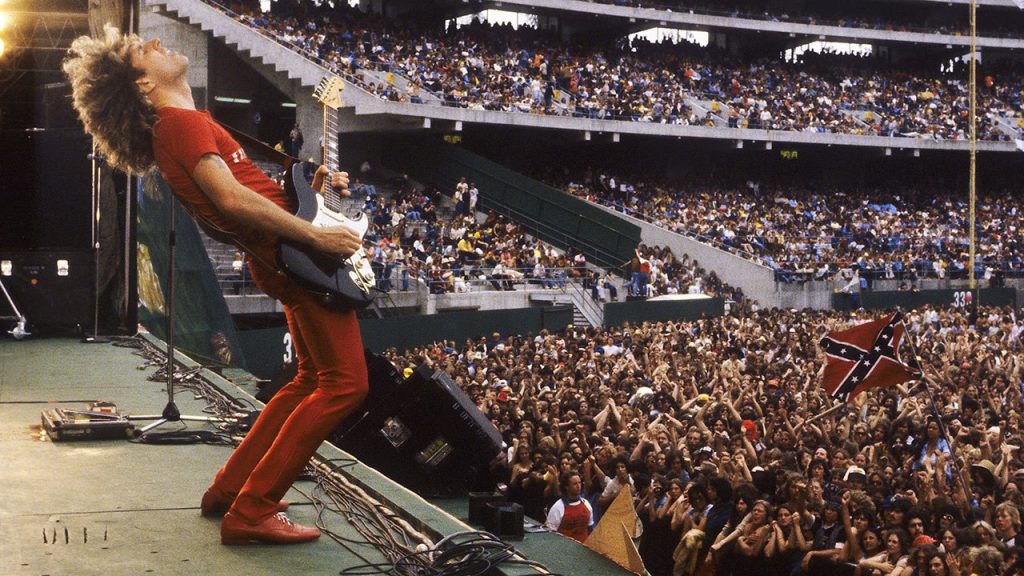
He Brought Real Melody Into Van Halen
Here’s the thing most fans don’t fully admit during “Hagar vs Roth” arguments:
Eddie Van Halen wrote differently once Sammy joined the band.
That’s not criticism of Roth. It’s just reality.
David Lee Roth-era Van Halen thrived on swagger, rhythm, danger, and explosive unpredictability. Sammy Hagar introduced stronger melodic structure and emotional lift into the music. Suddenly Eddie’s keyboards mattered more. Choruses expanded. Songs became more cinematic.
And Sammy’s voice made that evolution possible.
Tracks like “Dreams,” “Why Can’t This Be Love,” and “Right Now” simply don’t work without a singer capable of balancing power with emotional sincerity. Sammy could sell inspirational material without sounding fake — which is honestly much harder than cynical critics think.
Most fans don’t realize how difficult songs like “Dreams” are vocally either. Those sustained high notes require enormous control, especially live. And during the late ’80s, Sammy consistently delivered them in massive arenas night after night.
What’s fascinating is that his voice also softened Van Halen emotionally without weakening the band’s energy. The music still punched hard. But it gained a reflective side the Roth era rarely explored.
That shift divided fans forever.
Some believed Van Halen lost its dangerous edge. Others felt the band matured musically. Honestly, both perspectives make sense. The two eras almost feel like separate bands sharing the same logo.
But Sammy’s voice became the bridge that allowed Van Halen to survive changing musical tastes during the late ’80s and early ’90s.
Sammy Sounded Joyful — and That Was Rare
This may be the most underrated thing about Sammy Hagar as a singer.
He sounded happy.
Not cheesy. Not fake. Genuinely joyful.
And in rock music, especially hard rock, that’s surprisingly uncommon.
A lot of legendary frontmen built careers on darkness, anger, alienation, or self-destruction. Sammy absolutely had emotional depth — songs like “Little White Lie” or “When It’s Love” prove that clearly — but his core emotional frequency usually leaned toward celebration rather than despair.
That changed how audiences experienced him live too.
Watch old concert footage from the 5150 tour or the Live: Right Here, Right Now era. Sammy smiles constantly while singing. He interacts with crowds naturally. He projects excitement instead of tortured mystique. And somehow it never felt lightweight because the vocal commitment remained completely real.
Truth be told, that openness probably hurt his critical reputation in certain circles.
Rock critics often reward suffering more than joy. Darker artists sometimes appear “deeper” automatically. Sammy never fully fit that narrative because he genuinely seemed to enjoy life — Ferraris, tequila, beaches, loud music, all of it.
But fans connected to that spirit emotionally.
Especially working-class American fans who grew up seeing rock music as escape rather than intellectual performance art. Sammy Hagar songs often sounded like freedom from stress, not invitations deeper into it.
That emotional optimism became one of his most defining vocal qualities.
His Voice Balanced Toughness and Vulnerability
What made Sammy unique wasn’t simply vocal strength. Plenty of singers can yell loudly.
It was the emotional balance.
Sammy could sound aggressive without sounding cruel. Vulnerable without sounding weak. Confident without sounding detached. That combination gave his performances unusual warmth for arena rock.
Take “Right Now” for example.
The song could have collapsed under its own ambition in less capable hands. Big keyboards. Serious lyrics. Huge emotional themes. But Sammy’s voice grounded it. He sounded believable because there was always an underlying humanity in the delivery.
On the other hand, he could still tear into pure hard-rock material effortlessly.
“I Can’t Drive 55” remains one of the great driving songs in rock history because Sammy attacks it with absolute conviction. Same with “There’s Only One Way to Rock.” Same with Montrose material decades earlier. The aggression always felt earned rather than theatrical.
Most fans believe that authenticity came directly from his upbringing.
Unlike some rock stars who projected untouchable coolness, Sammy carried traces of working-class struggle into his voice throughout his career. You could hear effort. Hunger. Gratitude. Even success never fully polished those things away.
And honestly, that made people trust him.
Trust matters more in classic rock than critics sometimes acknowledge. Fans spent decades with these songs. They can sense when emotion feels manufactured.
Sammy rarely sounded manufactured.
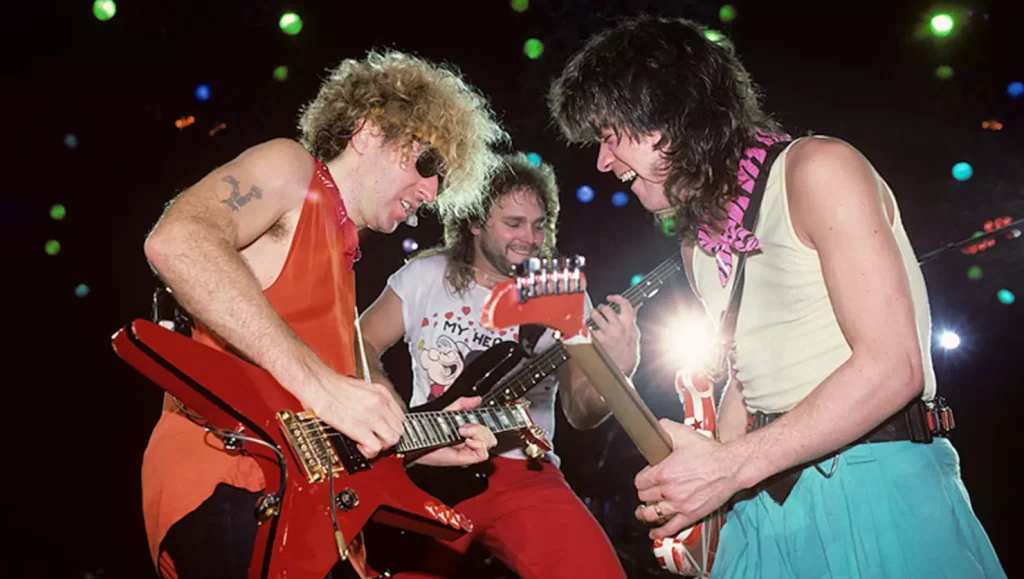
Aging Changed His Voice — But Not His Identity
Every rock singer changes with age. Every single one.
The interesting question is what survives once the impossible high notes become harder to reach.
With Sammy Hagar, the personality survived.
That’s why later projects like Chickenfoot still worked so well. Even as the voice roughened slightly, the emotional core remained intact. The enthusiasm. The attack. The joy. Fans still recognized the guy instantly within two lines of singing.
And honestly, Sammy handled aging better vocally than many classic rock peers.
Partly because he never relied entirely on technical perfection to begin with. His appeal always involved energy and emotional sincerity as much as pristine vocal mechanics. That foundation gave him room to evolve naturally without completely losing identity.
What’s interesting is that older Sammy performances sometimes carry more emotional weight now than younger ones did. There’s more life experience behind the words. More reflection. More gratitude. Especially after the death of Eddie Van Halen, certain Van Halen songs suddenly carried deeper emotional resonance live.
The story gets complicated here because nostalgia affects how fans hear singers too.
People don’t just hear the notes anymore. They hear memories attached to those notes. Summers. Relationships. Road trips. Old friends. Lost years.
And Sammy’s voice remains deeply tied to those emotional spaces for millions of classic rock fans.
Why Sammy Hagar Still Feels Different Today
Honestly, the older I get, the more I appreciate what made Sammy Hagar unusual.
He never tried to sound dangerous in a calculated way. Never leaned too heavily into tortured-genius mythology. Never acted embarrassed by melody, emotion, or fun. He embraced all of it openly.
That openness shaped everything — the solo years, the Van Halen era, the Cabo years, even the business ventures. Fans sensed continuity between the singer and the person. The voice matched the lifestyle somehow.
And maybe that’s the real answer to what makes Sammy unique as a singer.
Consistency of spirit.
From Montrose to Van Halen to Chickenfoot, the emotional DNA stayed recognizable. Loud guitars. Big choruses. Hopefulness. Energy. Humanity. That combination gave Sammy Hagar songs a warmth many technically “cooler” singers never achieved.
Somewhere tonight, somebody’s driving home with “Dreams” or “Mas Tequila” blasting through the speakers, singing along badly at a red light and suddenly feeling twenty years younger for a moment.
That reaction doesn’t happen because of vocal technique alone.
It happens because Sammy Hagar always sounded like he genuinely loved being alive.