You can’t really understand Sammy Hagar without understanding the cars.
Seriously.
The Ferraris. The muscle cars. The custom builds. The obsession with speed that eventually gave the world I Can’t Drive 55 — arguably the greatest speeding-ticket anthem in rock history. Cars were never just toys for Sammy Hagar. They became part of the mythology. Part of the music. Part of the identity fans came to associate with the Red Rocker long before he ever joined Van Halen.
And honestly, few rock stars wore that obsession more authentically.
A lot of celebrities buy exotic cars because they’re rich. Sammy loved cars before the money ever arrived. That’s the difference. You can feel it when he talks about engines, gear ratios, or driving through California at sunrise with loud music shaking the dashboard. The passion sounds real because it is real.
Truth be told, Sammy’s garage over the decades tells you almost as much about his personality as his albums do.
Fast but fun. Expensive but emotional. Flashy without being cold. American muscle mixed with European performance. A little reckless sometimes. A little nostalgic. Entirely unapologetic.
And if you grew up during the golden age of classic rock, there’s a good chance Sammy Hagar’s cars became part of your imagination too — symbols of freedom blasting down an endless highway with the windows down and the stereo painfully loud.
The Ferrari Years Defined the Red Rocker Image
If there’s one brand forever tied to Sammy Hagar’s public image, it’s Ferrari.
No question.
By the early 1980s, Sammy had already become famous for his love of Ferraris, and eventually the cars became almost inseparable from his music career. Most fans immediately think of the bright red Ferrari featured around the I Can’t Drive 55 era, but the relationship went much deeper than one song or one photoshoot.
Sammy genuinely worshipped high-performance Italian engineering.
And honestly, that obsession perfectly matched the energy of his solo career at the time. Albums like Standing Hampton and VOA sounded fast. Not metaphorically. Literally fast. The guitars, the vocals, the pacing — everything pushed forward with this restless momentum that mirrored the feeling of driving way too quickly down a California highway.
The Ferrari became the physical embodiment of that attitude.
What’s interesting is that Sammy never treated these cars like museum pieces. He drove them. Hard. Stories about him getting speeding tickets became legendary long before celebrity car culture exploded online. And unlike some rock stars who collect vehicles mainly for investment purposes, Sammy approached cars emotionally.
That’s important.
Because it made the obsession relatable to fans. Plenty of classic rock listeners grew up dreaming about Corvettes, Camaros, Mustangs, or Ferraris they’d never realistically own. Sammy represented that fantasy fully realized.
You could argue that the Ferrari lifestyle also helped separate Sammy from David Lee Roth during the “Hagar vs Roth” years later on. Roth projected nightclub swagger and theatrical chaos. Sammy projected open-road freedom and horsepower.
Different archetypes entirely.
And honestly? Both worked brilliantly for their eras of rock history.

“I Can’t Drive 55” Turned Cars Into Rock-and-Roll Mythology
The moment Sammy Hagar’s car obsession officially entered American pop culture came in 1984.
That’s when “I Can’t Drive 55” exploded.
Now here’s the funny thing: the song almost sounds playful today because so many people know the chorus. But at the time, it hit a genuine cultural nerve. America’s national 55 mph speed limit frustrated drivers everywhere during the late ’70s and early ’80s, especially car enthusiasts who felt the rule sucked the joy out of driving.
Sammy tapped directly into that frustration.
And because he already carried the image of a guy who genuinely loved speed, fans believed every word. The song didn’t feel manufactured by a label trying to cash in on rebellion. It felt like something Sammy Hagar would naturally scream out a car window at 2 a.m.
That authenticity matters.
The music video only deepened the mythology. Fast cars. Burnouts. Police chases. Sammy grinning like a man who knew exactly how ridiculous and glorious the whole thing was. It became one of the defining visual statements of mid-’80s American rock culture.
Truth be told, the success of that song permanently linked Sammy to car culture in ways even Van Halen never fully erased.
Even decades later, you can’t discuss Sammy Hagar songs without somebody bringing up speeding stories or Ferraris within five minutes.
And honestly, there’s something refreshing about how uncomplicated the whole thing feels. Sammy never pretended his love of cars represented deep political philosophy or tortured artistic symbolism. He liked driving fast because it felt exciting.
That’s rock and roll sometimes.
Simple. Loud. Emotional.
And if you think about it, “I Can’t Drive 55” captured a very specific American feeling that still resonates with classic rock fans today: resistance to limitation. The idea that freedom should feel wide open and dangerous.
Cars became the perfect metaphor for that spirit.
Sammy’s Collection Expanded Beyond Ferraris
Most casual fans know about the Ferraris. Hardcore car people know the garage goes much deeper.
Over the years, Sammy Hagar reportedly owned or drove an impressive mix of high-performance vehicles ranging from American muscle to rare European exotics. Various interviews, TV appearances, and garage tours revealed his appreciation for craftsmanship across multiple eras of automotive history.
And honestly, that broader taste says a lot about him too.
Because while Ferrari became the public-facing symbol, Sammy’s actual interests never stayed locked into one lane. He’s shown affection for vintage Ford Mustangs, powerful Camaros, performance trucks, and custom hot rods alongside the exotic imports.
That balance matters.
A lot of wealthy collectors eventually become obsessed with exclusivity alone. Sammy always seemed more interested in emotional connection. The story behind the car. The feeling it created. The sound. The memory attached to it.
Most fans don’t realize how closely that mindset parallels his music career.
Sammy never chased “cool” in the detached sense. He chased excitement. Enthusiasm. Fun. That’s why even some of his critics reluctantly admit he comes across as genuinely passionate rather than carefully manufactured.
The story gets especially interesting when you look at his later-life appreciation for custom builds and personalized vehicles. By that point, Sammy wasn’t trying to prove status anymore. He already had the fame, the money, the success. The cars became extensions of personality rather than trophies.
And honestly, there’s something very American about the way Sammy approaches automobiles. Unlike European rock stars who often cultivate mystery or elegance around luxury cars, Sammy treats them almost like instruments in a garage-band lifestyle.
They’re meant to be used.
Driven loudly.
Shared with friends.
Talked about endlessly over tequila.
Van Halen Fans Saw the Car Culture Spill Into the Band
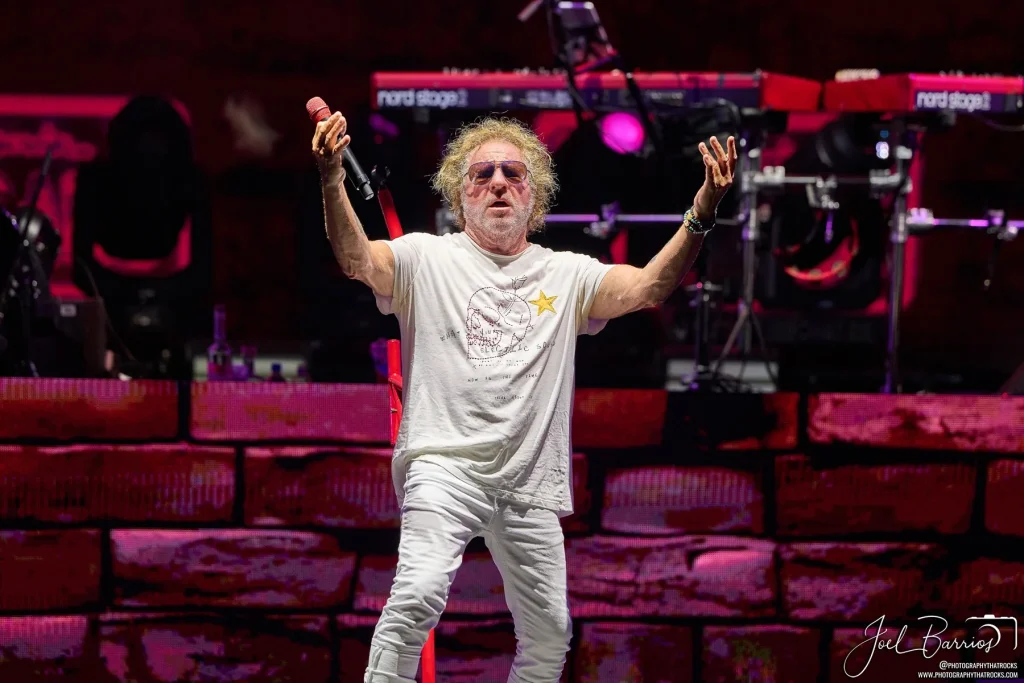
When Sammy joined Van Halen in 1985, his automotive identity came with him.
You can actually feel it changing the band’s atmosphere.
The David Lee Roth-era Van Halen image revolved around nightlife, women, comedy, and sheer unpredictability. Sammy brought more California highway energy into the mix. The vibe became less sleazy-club chaos and more open-road freedom.
That shift influenced everything from interviews to songwriting to stage presentation.
And honestly, it fit the era surprisingly well.
Albums like 5150, OU812, and For Unlawful Carnal Knowledge sounded more polished and expansive than the early records. Songs like “Dreams” and “Best of Both Worlds” carried this soaring, optimistic quality that matched Sammy’s personality perfectly.
Even the visual culture around the band changed subtly. Faster cars. Cleaner aesthetics. More mature swagger.
To be fair, some old-school fans hated that evolution. They wanted the dangerous unpredictability of the Roth years forever. And honestly, I understand that perspective. Early Van Halen had a lightning-in-a-bottle chemistry that nobody could fully recreate.
But Sammy’s version of cool connected with a different side of American rock culture.
Less streetwise. More aspirational.
And his love of cars became part of that identity naturally.
There’s also something fascinating about the contrast between Sammy and Eddie Van Halen personally. Eddie obsessed over guitars the way Sammy obsessed over cars. Both were mechanics at heart in different ways — constantly tinkering, modifying, experimenting, chasing performance.
That shared mentality arguably helped their creative chemistry work as well as it did for a while.
Cars Represent Something Bigger in Sammy’s Story
At a certain point, asking “What cars does Sammy Hagar own?” stops being about inventory and starts becoming about symbolism.
Because the cars represent freedom.
That’s really the heart of it.
Freedom from limits. Freedom from aging. Freedom from expectations. Freedom from the music industry itself. Whether Sammy was fronting Montrose, battling through the Van Halen years, building Cabo Wabo, or touring with Chickenfoot, the car culture remained emotionally consistent.
Always moving forward.
Always chasing excitement.
And honestly, that philosophy may explain why Sammy Hagar aged more gracefully than many classic rock peers. He never fully surrendered to bitterness or nostalgia. Even when relationships fractured. Even when Eddie Van Halen’s death changed the emotional landscape forever. Even when rock music stopped dominating popular culture.
Sammy kept driving.
Literally and metaphorically.
That spirit resonates deeply with longtime fans because classic rock itself often revolves around motion. Highways. Escape. Youth. Possibility. The open road remains one of the central images in American rock mythology, and Sammy Hagar embraced it more completely than almost anyone from his generation.
Somewhere tonight, there’s probably an old Ferrari sitting in one of Sammy’s garages with dust from a recent drive still clinging to the paint, keys tossed casually nearby while music drifts through the house.
And honestly, that image feels exactly right.
Not locked away behind velvet ropes. Not treated like sacred museum art. Just another beautiful machine connected to a life spent chasing speed, songs, friendship, and that impossible feeling rock and roll promised all of us once upon a time.