Few figures in classic rock spark arguments quite like Sammy Hagar. Mention his name in a room full of Van Halen fans and you’ll probably get three different reactions immediately. Somebody praises the powerhouse vocals on 5150. Somebody else complains he made the band “too polished.” And somewhere in the corner, a diehard David Lee Roth fan is already preparing for battle.
That’s the thing about Sammy Hagar’s biggest controversies — they were never just tabloid drama. They mattered because they touched the nerve center of American rock culture. Identity. Ego. Loyalty. What Van Halen was supposed to sound like. What hard rock itself was becoming in the late ’80s and ’90s.
Truth be told, Hagar spent decades caught between admiration and skepticism. He sold millions of records, helped push Van Halen to four No. 1 albums, and became one of the most successful frontmen of his era. Yet somehow, controversy followed him almost every step of the way.
And honestly, that tension may be part of why fans still can’t stop talking about him.
The Hagar vs Roth Debate Never Really Ended
Let’s start with the obvious one.
The Hagar vs Roth argument is arguably the most divisive fan debate in classic rock history outside maybe Ozzy vs Dio in Black Sabbath. And unlike some old rock feuds that faded with time, this one still feels weirdly personal to people.
When Sammy Hagar joined Van Halen in 1985 after David Lee Roth’s departure, expectations were impossible. Roth wasn’t just a singer. He was the image of Van Halen for millions of fans — the swagger, the chaos, the California party mythology. Replacing him felt almost sacrilegious.
Then 5150 came out in 1986 and complicated everything.
Commercially, the album was a monster. “Dreams,” “Why Can’t This Be Love,” and “Love Walks In” helped push Van Halen into a more melodic, keyboard-heavy direction. Some fans loved the emotional depth Hagar brought. Others thought the band lost its dangerous edge.
Here’s the thing: both sides have valid points.
Even Eddie Van Halen admitted Hagar allowed him to explore more musically sophisticated songwriting. At the same time, Roth-era fans often argue the band became too polished and adult-contemporary leaning during the Sammy years.
The debate became tribal. Still is.
And Sammy, to his credit or detriment depending who you ask, never really backed away from defending his era of the band.
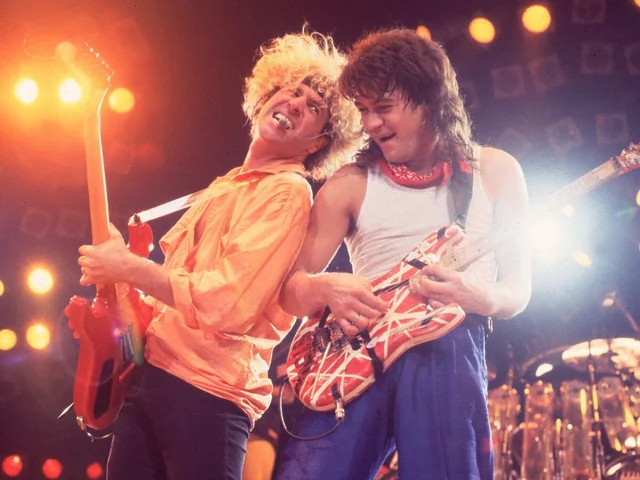
The Explosive 1996 Breakup With Van Halen Turned Ugly Fast
The story gets darker here.
By 1996, tensions inside Van Halen had reached a breaking point. Publicly, the band initially claimed Sammy Hagar left over disagreements connected to a planned greatest hits project and soundtrack recordings for Twister. Privately? The situation was far messier.
Hagar later described communication problems with Eddie Van Halen, frustration over control issues, and growing resentment inside the band. Eddie, meanwhile, reportedly felt Hagar was becoming difficult and increasingly disconnected from the group dynamic.
Then came the MTV Video Music Awards.
Van Halen reunited briefly with David Lee Roth onstage in 1996 to present an award, shocking fans everywhere. Most people assumed Roth was officially back. Sammy Hagar was furious, later saying he felt blindsided and humiliated by the situation.
Truth be told, many fans still view that moment as one of the coldest public betrayals in rock history.
What’s interesting is how emotionally raw both sides remained for years afterward. Interviews became increasingly hostile. Hagar openly criticized Eddie Van Halen’s behavior during certain periods, especially regarding alcohol and dysfunction inside the band.
Meanwhile, Van Halen loyalists often accused Sammy of talking too much publicly.
And honestly, the bitterness lingered far longer than most people expected.
Sammy Hagar’s Public Comments About Eddie Van Halen Divided Fans
This may be the most emotionally complicated controversy of all.
After Eddie Van Halen died in 2020, the entire rock world mourned. Rivals, former bandmates, younger guitar players — everybody understood the magnitude of the loss. Eddie wasn’t just a guitarist. He changed the language of rock music itself.
But even before Eddie’s death, Sammy Hagar had spent years speaking openly about their fractured relationship. Sometimes lovingly. Sometimes critically. Sometimes both in the same interview.
That honesty divided fans sharply.
Some appreciated Hagar’s transparency. Others believed he crossed lines by discussing Eddie’s health struggles, addiction issues, and erratic behavior publicly. The criticism intensified after Hagar revealed details in interviews and memoir excerpts that some fans felt should have stayed private.
To be fair, Hagar also consistently praised Eddie’s genius. He repeatedly called him the greatest guitar player he’d ever worked with and spoke emotionally about their musical chemistry during albums like OU812 and For Unlawful Carnal Knowledge.
But the emotional complexity never disappeared.
Most fans don’t realize how deeply personal the Van Halen collapse became for Hagar. This wasn’t just business. These were friendships, creative partnerships, and years of shared history falling apart in public view.
And when grief gets mixed with unresolved resentment, things rarely stay simple.
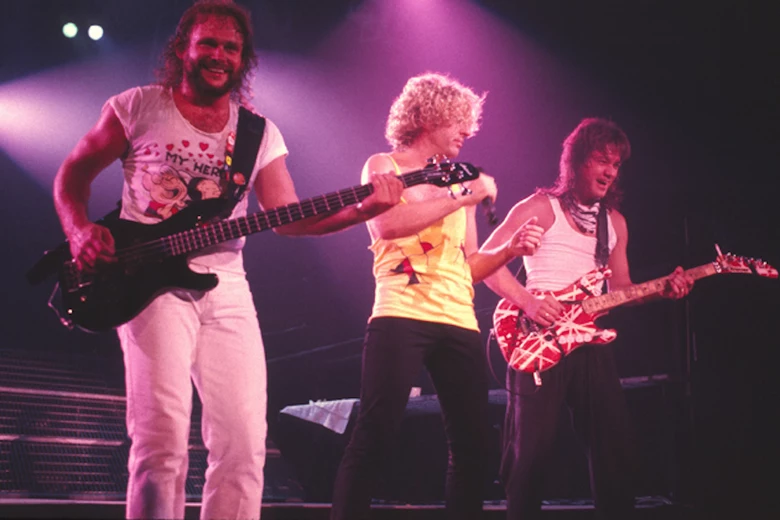
The “Van Hagar” Criticism Followed Him for Decades
Some rock fans never accepted Sammy Hagar in Van Halen at all. Period.
The nickname “Van Hagar” started partly as a joke but gradually became a cultural dividing line. For critics, it symbolized everything they disliked about the band’s post-1985 direction — more ballads, more keyboards, less raw danger.
What’s fascinating is how unfair some of the criticism became over time.
Albums like For Unlawful Carnal Knowledge from 1991 hit incredibly hard. Songs like “Poundcake” and “Judgement Day” absolutely ripped live. Even hardcore Roth supporters often admit Eddie Van Halen played some of his most technically refined guitar work during the Sammy years.
But perception matters in classic rock mythology.
Roth embodied reckless youth. Hagar represented maturity and musicianship. Depending on what fans wanted emotionally from Van Halen, one version always felt more “real” than the other.
And honestly, Sammy sometimes made the backlash worse by pushing back aggressively in interviews. He clearly wanted validation from skeptics who were never going to give it to him.
That tension became part of his identity whether he liked it or not.
Cabo Wabo and the “Selling Out” Accusations
Compared to the Van Halen drama, this controversy seems smaller. But culturally, it mattered.
When Sammy Hagar built the Cabo Wabo tequila empire and became massively successful as a businessman, some longtime rock fans accused him of turning into more of a brand than an artist. Suddenly the Red Rocker wasn’t just associated with Sammy Hagar songs or arena tours. He became linked to restaurants, alcohol marketing, merchandise, and lifestyle branding.
To some fans, it felt authentic. Hagar genuinely loved the Cabo lifestyle long before it became profitable. To others, it looked like commercialization swallowing rock authenticity whole.
The irony? Hagar arguably became one of the smartest entrepreneurs in classic rock history precisely because he understood his audience so well.
Still, criticism lingered.
Certain fans viewed the endless Cabo imagery as proof he’d drifted too far from the hungry hard-rock spirit of albums like Standing Hampton or Street Machine. Others thought he earned every bit of success after surviving decades in a brutal music industry.
It depends who you ask.
But the accusations of “selling out” followed him anyway, especially among older-school rock purists who preferred their heroes a little more tortured and mysterious.
Why Sammy Hagar’s Controversies Made Him More Human
Classic rock history loves myths. Untouchable guitar gods. Wild frontmen. Tragic geniuses frozen in time.
Sammy Hagar never really fit neatly into any of those categories.
He was too outspoken. Too emotional. Too practical sometimes. Too successful outside music for certain fans to fully trust him. And maybe that’s exactly why his controversies still resonate decades later. They exposed the messy human side of rock stardom instead of preserving the fantasy.
Truth be told, Hagar’s career feels more relatable because of the conflicts. The arguments with Eddie Van Halen. The endless Hagar vs Roth debates. The business criticism. The interviews where frustration clearly spilled over. None of it feels manufactured. If anything, it often felt too real.
And honestly, maybe that’s why people still care so much.
Because underneath all the noise, the tequila jokes, the fan wars, and the public feuds, there was still a guy standing onstage singing “Right Now” or “Dreams” with absolute conviction. For a lot of fans, those songs became part of their lives regardless of which version of Van Halen they preferred.
Years later, people still argue about Sammy Hagar because the music mattered enough to fight over in the first place.